Feedback report: 30 September to 2 October 2025
1. Introduction

A team of local government peers, led by the Local Government Association (LGA), undertook a Social Housing Peer Challenge (SHPC) of Thurrock Council from 30 September to 2 October 2025.
The SHPC is for stock-holding councils, providing a review of leadership, governance and scrutiny; finance and capacity to deliver within the housing service; and safety in the home. It also includes additional areas, as agreed with the council, which are within the scope of the Regulator of Social Housing (RSH) inspection regime. This combined approach supports councils in strengthening their housing services and ensuring alignment with regulatory expectations.
At Thurrock Council these additional areas of scope include resident voice and engagement and quality neighbourhoods and tenancy management.
The SHPC has been delivered from the position of a ‘critical friend’, providing robust, strategic and credible challenge and support to the council to help drive continuous improvement in the housing service for tenants and residents. Further details about the SHPC process can be found in Appendix A.
The peer team consisted of highly experienced and knowledgeable senior local government councillor and officer peers (see section four). This report provides Thurrock Council with feedback on the peer team’s findings. It provides the council with a set of a high-level recommendations alongside further recommendations under each of the agreed areas of scope.
The council is encouraged to publish this report to share learning and good practice. The council should then consider how best to implement the recommendations. The LGA would encourage the council to develop, implement and publish an action plan which responds to the recommendations from this SHPC.
2. Executive summary
Thurrock is located at the heart of the Thames Gateway just east of London. It is a vibrant and diverse borough that combines urban energy with rural charm. It features bustling towns like Gray’s, Tilbury, and Purfleet in the south, alongside villages and open countryside in the north, all within 165 square kilometres and boasting 18 miles of riverfront. With a growing population of over 175,000 projected to rise another 9.2 per cent by 2030, Thurrock is a relatively young borough, with an average age of 36.9 years and nearly 26 per cent of residents under 18. The community is richly diverse, with over 130 languages spoken by schoolchildren, more than 10 per cent of residents born outside the UK and widely varying socioeconomic conditions.
Thurrock Council owns over 9,800 homes needs including over 1,000 sheltered housing properties and over 2,200 garages/plots. All but 303 of the residential properties are currently for social rent. Half of the council's general needs properties are three-bedroom homes, some dating back to the late 19th century and the remaining majority comprise one and two-bedroom flats with 12 high rise blocks.
In September 2022, the Government appointed Best Value Commissioners for Thurrock Council. This intervention was in response to concerns about levels of financial risk and debt, and clear 'Best Value' failure in relation to financial functions.
Commissioners are working alongside the council to oversee an Improvement and Recovery Plan which aims to achieve financial stability and make the council fit for the future. As part of the transformation and improvement programme, the council asked the LGA to undertake a review of its social housing service.
Peers found the housing service at a critical phase of transformation. While there is much to commend - dedicated staff delivering some really important services supporting tenants and residents, a healthy Housing Revenue Account (HRA), and improvement plans already underway - the service faces significant challenges that must be addressed to meet regulatory expectations and deliver a tenant/resident-first approach. The external environment is one of heightened scrutiny, with consumer standards requiring demonstrable compliance and transparency. Internally, the service must strengthen governance arrangements, secure permanent senior officer leadership, and continue to ensure future financial resilience to enable long-term investment.
The peer team found evidence the council has been working hard to strengthen approaches to tenant and resident engagement. This work should continue to ensure tenants are genuinely at the heart of decision-making. To meet the transparency, influence and accountability elements of the RSH consumer standards, engagement must move beyond consultation to meaningful involvement in governance and oversight and is the responsibility of everyone.
Meeting the decent homes standard is a key challenge.
Current assumptions of 95 per cent decency are based on cloned data from only 35 per cent of stock surveyed, and EPC data is incomplete. The council has recently commissioned a full stock condition survey. Achieving and maintaining 100 per cent decency is non-negotiable, yet peers questioned whether the repairs and maintenance budget is sufficient and whether the balance of spend on management versus maintenance is justified. Sensitivity analysis and stress testing of the budget is essential to confirm financial capability.
The service also needs to articulate a clear and honest narrative, one that acknowledges the challenges whilst celebrating successes, of which there are many (tenant satisfaction, speed of repairs and partnership working). This is not simply a communications exercise; it is about building trust and confidence among tenants, councillors, and regulators and demonstrating the journey the service is on.
Governance arrangements require urgent review to ensure effective scrutiny and accountability by tenants, senior leadership, and councillors. Without this, assurance will remain fragmented and risk exposure will increase. Peers believe there needs to be more information and data sharing to ensure full oversight of the service and robust challenge. This also requires tenants, councillors and officers to be upskilled, understand their roles and responsibilities under the consumer standards.
Interim senior officer leadership arrangements within the service have provided stability over the past year, however, permanent senior officer leadership is needed to drive improvement at pace and embed culture and practices that support and promote staff, prioritises compliance and tenant experience.
Alongside this, a robust long-term HRA business plan and narrative must be developed at pace to support investment in decent homes, decarbonisation, development, and regeneration. This plan should be underpinned by annual financial model updates and rigorous stress testing to safeguard sustainability. The approved medium term financial plan forecasts deficits in 2026/27 of £1m, £1.5m in 2027/28 then a surplus of £1.5m in 2029/30. However, the HRA was underspent by £5.3m in 2024/25 and is forecast to underspend by £0.5m in 2025/26.
Finally, compliance with consumer standards must be treated as a corporate priority. A full gap analysis is urgently required to understand the current position and identify areas of non-compliance. Findings should be reported to full council to secure council-wide assurance. Where gaps exist, engagement with the RSH should be considered to demonstrate transparency and commitment to improvement.
In summary, the housing service is well-positioned to succeed, but this will require decisive leadership, strengthened governance, strategic investment, and a unified organisational commitment to consumer standards. The next phase is about converting plans into delivery at pace and ensuring that tenants remain at the heart of everything the council does.
3. Recommendations
The following are the peer team’s key recommendations which have been prioritised on the grounds of urgency and importance.
3.1 Recommendation 1
Understand your tenants, ensuring they are the heart of everything you do.
This should include:
- Completing and maintaining accurate tenant profile data (such as equality, language, household needs).
- Using tenant insight data to tailor communication, access and support.
- Expanding tenant involvement in key decision-making structures, including scrutiny panels, procurement processes and policy co-design.
- Producing an annual report to tenants and Council that demonstrates how the council has engaged tenants and responded to their feedback.
3.2 Recommendation 2
Understand your homes ensuring effective plans are in place to achieve and maintain 100 per cent decency.
This should include:
- Completing the full stock-condition survey and establishing a rolling programme of inspections to keep data current.
- Creating a single asset database or system that clearly displays the condition, compliance, and energy-performance information for all homes.
- Producing a costed plan that sets out how non-decent homes will be brought up to standard and how decency will be sustained thereafter.
- Developing an annual report to tenants and Council that sets out performance against decency targets, EPC levels and delivery of planned works.
3.3 Recommendation 3
Understand your service and ensure there’s a story that is honest about challenges and celebrates successes.
This should include:
- Using tenant satisfaction data, complaints learning and case studies to evidence improvement and inform future priorities.
- Utilise internal communications to celebrate successes within the service.
3.4 Recommendation 4
There needs to be a stronger grip on governance assurance and accountability by tenants, senior leadership and councillors. A review of the governance and assurance framework needs to ensure tenants and councillors have effective oversight and scrutiny of the service, performance and delivery.
This should include:
- Defining clear roles and responsibilities for councillors, senior officers, and tenant representatives in overseeing the housing service.
- Reviewing and improving where necessary the reporting routes on service performance for example at Cabinet, Overview and Scrutiny, tenant panels.
3.5 Recommendation 5
Put in place permanent leadership to drive at pace the improvement of housing service – implementing an effective corporate culture that delivers compliance with consumer standards and a tenant first approach.
3.6 Recommendation 6
Develop a Business Plan strategy for the long term which supports investment requirements (decent homes, decarbonisation, development and regeneration). Update the financial model annually.
3.7 Recommendation 7
To meet the consumer standards, you need to understand your current position, gaps and plans to address and maintain them. This needs reporting to full council to ensure council wide assurance. Following a full gap analysis (consider external support) if non-compliant areas are found, consideration should be given to engagement with the regulator.
This should include:
- Undertaking a self-assessment of the housing service against the RSH’s consumer standards, identifying strengths, risks and areas for improvement.
- Developing and implementing an action plan to address any non-compliance or weaknesses identified, with clear ownership, timelines and progress tracking.
- Report the self-assessment findings and action plan to tenants and Council to secure council-wide oversight and assurance.
- Considering external support where significant risks or gaps are identified.
- In addition to the key recommendations, section five of this report captures our detailed feedback and additional recommendations within each of the SHPC’s core areas of focus.
4. Peer team
SHPC is conducted by experienced LGA housing peers, including councillors and senior housing directors/officers. The composition of the peer team was shaped by the specific focus of the challenge agreed with Thurrock Council, with the LGA selecting peers based on their relevant housing knowledge and expertise. The peers for this SHPC were:
- Cllr Ahsan Khan - Deputy Leader and Housing and Regeneration, London Borough of Waltham Forest
- Alan Leicester – Director of Housing and Environment, West Lancashire Borough Council
- Mark Breathwick – Assistant Director of Culture and Communities, Medway Council
- David Sherrington – Head of Estate Renewal, London Borough of Haringey
- Adrian Waite – LGA Associate Financial Adviser
- Ama Goulden – Assistant Peer Challenge Manager, LGA
- Kirsty Human – Peer Challenge Manager, LGA
5. Detailed feedback and recommended actions
This section of the report provides detailed feedback along with additional recommendations related to the agreed areas of focus.
When developing the action plan (in response to the SHPC’s findings), the council should consider both the key recommendations presented in section three and the additional recommendations set out below.
5.1 Leadership, governance and scrutiny
The housing service demonstrates strong foundations, through committed staff, a healthy financial position, and improvement plans already in place. These factors provide confidence that the service can deliver high-quality outcomes for tenants.
A healthy Housing Revenue Account (HRA) operating within budget and generating a surplus in 2024/25, ensures the council can continue to invest in homes and services. Peers witnessed hardworking and committed staff, consistently striving to deliver the best for tenants. Existing improvement plans mean that many challenges are already being addressed, reducing risk and accelerating progress.
Despite these strengths, the service faces critical challenges in governance, leadership, and compliance. Without decisive action, these factors could undermine tenant confidence, regulatory compliance, and long-term sustainability. Weak governance limits transparency and assurance, while interim leadership arrangements risk slowing progress. Insufficient investment in repairs and maintenance could compromise home quality and tenant safety. Failure to meet consumer standards exposes the council to reputational and regulatory risk.
In addition to key recommendations three, four and five. Peers also recommend the council progress the following:
- Implement a programme of training and briefing sessions for all councillors and officers across the council to ensure they are fully aware of the consumer standards and their responsibilities and implications of non-compliance.
- Include an audit of tenant engagement and compliance with the consumer standards to the council’s audit programme.
Peers identified a disconnect between the views of senior management and councillors to that of officers within housing. There appeared to be an “urban myth” that the service was failing, when in fact much of the good work was just hidden within a much larger service. Structurally the removal of housing from adults’ services has increased visibility and provided the service with an opportunity to demonstrate the good work it delivers. Efforts now need to focus on telling an honest self-reflective story of housing, past, present and future. Highlighting the areas of best practice, the lessons that have been learned and the challenges that remain.
Peers observed low staff morale, exacerbated by negative perceptions and the absence of permanent leadership. Interim management arrangements following the departure of the Head of Service have left some staff feeling unsupported and operationally exposed. A dedicated, permanent leader is urgently needed to act as an ambassador for the service, someone who can build trust, improve morale, and lead cultural change at pace.
The Housing Strategy 2022-27 was developed following consultation with tenants, stakeholders and partners. Now at the midway point, it would be advisable to consider an interim review of the strategy, its aims and objectives to ensure it still meets the requirements of the service and the expectations of tenants. Peers were encouraged to see housing included as a priority within the council’s revised Corporate and Improvement Plan 2025-29. This emerging golden thread from the top of the organisation needs to continue being developed to ensure strategic alignment of housing within all council services.
Peers have concerns about the effectiveness of the governance framework supporting the housing service. Councillors and officers reflected on poorer relationships and oversight since dissolving the Housing Committee and including housing within the Place Overview and Scrutiny Committee – “When there was a housing scrutiny committee, we were very well informed”. Officers had similar concerns in their ability to brief councillors when there were only limited opportunities to do this at Cabinet or Place Overview and Scrutiny which have restrictions on the number of reports that can be presented to each meeting – “housing can get lost in the wider agenda”.
The cabinet member for social housing, newly appointed in May 2025, is still developing an understanding of the portfolio and executive responsibilities. Backbench councillors reported limited access to performance data, little awareness of consumer standards, and minimal exposure to tenant communications such as newsletters. They suggested improvements to member induction packs to better outline housing responsibilities. Despite this, councillors acknowledged a significant reduction in repairs-related casework and praised the repairs contractor’s drop-in sessions and the successful decant of over 160 flats at Blackshots estate.
While a tenant representative sits on the Place Overview and Scrutiny Committee and performance dashboards are shared with the Housing Services Residents Panel (HSRP), tenants reported no involvement in financial oversight. They do not choose which policies to review and require further development opportunities to grow skills, experience and knowledge to scrutinise effectively.
Triangulating conversations with officers, councillors and tenants it became clear to peers there is little political oversight or assurance of the service and a review of the governance and assurance framework is needed to provide adequate grip and ensure external review. More information needs to be shared with councillors either through briefings or reports and councillors need more training on the consumer standards and their responsibilities and risks.
5.2 Finance and capacity to deliver
The HRA remains financially stable, operating within budget and generating a surplus in 2024/25, with the same forecast for 2025/26. Positive steps have been taken, including commissioning a 100 per cent stock condition survey, addressing legal compliance for service charges, and strengthening the HRA finance team. The council has also committed to an ambitious development programme, signalling strong intent for growth.
However, the current business plan lacks a clear narrative and does not fully address future challenges. It needs to be developed, agreed with tenants and councillors, and communicated effectively. Key gaps include the absence of a plan for financing decarbonisation and achieving the councils aim of EPC Level C by 2030, uncertainty over the council’s capacity to deliver the approved capital programme, and the need to confirm whether the repairs and maintenance budget is sufficient. Expenditure on repairs & maintenance appears to be relatively low in relation to total expenditure and in the absence of a full stock condition survey it is not possible to confirm whether it is sufficient to sustain the decent homes standard. Sensitivity analysis and stress testing are essential to ensure financial resilience.
In addition to key recommendation six. Peers also recommend the council progress the following:
- Develop a narrative around the 30-year business plan.
- Stress test and analyse the budget assumptions.
- Engage tenants in budget setting and scrutiny of financial reports.
The council’s Housing Revenue Account (HRA) has shown significant underspending in recent years. In 2024/25, the HRA was underspent by £5.3 million, and a further underspend of £0.5 million is forecast for 2025/26. Capital expenditure also fell short of expectations, with actual spend in 2024/25 £8.4 million below budget, and a projected underspend of £20.1 million in 2025/26. This was mainly due to delays in the development programme. These figures suggest a need to review the alignment between budget planning and delivery, particularly in relation to capital investment.
A service improvement group, led by the section 151 officer and using external consultants, is undertaking stress testing of the HRA. It is essential that the outcomes of this work are shared with tenants and councillors to ensure transparency and engagement.
Whilst not uncommon across the housing sector, it is a concern that external audits of the HRA have not been completed for several years. The Annual Governance Statement for 2024/25 makes no specific reference to the HRA, which may indicate a lack of financial transparency and strategic oversight in this area.
Although there are references to a 30-year business plan, peers found no supporting narrative or strategic context, suggesting that a comprehensive plan may not be in place.
There is a clear need to update the business plan to reflect future challenges and opportunities, including wider economic and policy impacts. Additionally, while the HRA business plan is currently the responsibility of the housing service, it is unclear whether housing managers have the necessary expertise to develop and maintain a robust long-term plan.
The strengthened HRA finance team is welcomed but peers voiced concerns about service specific expertise within the finance team. Some officers were unfamiliar with key terminology such as the housing regulator ratings “C1” and require further training and support, particularly in preparing HRA reports.
A more strategic approach to investment programmes is required, and peers were pleased to hear external consultants are currently reviewing asset management arrangements – A review and update of the asset management strategy should follow. Notably, the council’s 29 sheltered housing schemes lack a defined investment programme, and this is not reflected in the current budget. Cyclical maintenance is also not currently budgeted for, and this gap needs to be addressed to ensure the long-term sustainability of the sheltered housing stock.
Value for money reviews and financial benchmarking are not currently being undertaken for the HRA. While there are links to MHCLG and LG Inform benchmarking, the council needs to clarify what benchmarking is in place and how the data informs decision-making. Peers also noted that more money appears to be spent on management than maintenance, with an underspend on repairs. This spending profile is unusual and should be benchmarked against other authorities. A review of the management and maintenance costs should be undertaken with a view to ensuring that they represent value for money and provide assurance the base budget is sufficient.
Budget monitoring processes are in place, with monthly reviews and forecasting led by service teams and reviewed by finance. Directorate management teams meet to agree service priorities, but there are challenges in ensuring service managers take ownership of their budgets. Plans are in development to run budget holder learning sessions and provide training beyond basic functionality.
There is ongoing work to improve councillors’ understanding of the HRA budget, with briefings being held and further development planned. However, tenants currently receive no financial information relating to the HRA, which limits transparency, accountability and their opportunity to challenge and scrutinise the HRA budget.
The council is currently reviewing recharges between the HRA and General Fund, including compliance with ring-fencing rules. Additionally, there is a need to review service charges for leaseholders and tenants to ensure accuracy and fairness. Some individuals are being charged for grounds maintenance while others are not, and clarity is urgently needed. Peers support the plan to recruit a rent and service charge manager to develop a full cost recovery model and improve understanding and administration of service charges.
5.3 Safety at home
Progress is being made in building safety and compliance, with externally reviewed safety cases in place and quarterly tenant meetings in high-rise buildings to discuss safety. Voids are consistently brought up to decency standards and EPC Level C, and a 100 per cent stock condition survey has been commissioned to ensure data accuracy. Tenant satisfaction is above average (TP05 is 73 per cent), and wellbeing checks help identify issues such as damp and repairs.
However, significant gaps remain. External assurance for compliance is insufficient, and there is limited clarity on how non-decent homes, and their tenants are being monitored. Current assumptions of 95 per cent decency are based on cloned data from only 35 per cent of stock surveyed, and EPC data is incomplete. Awareness of the Housing Health and Safety Rating System (HHSRS) is low, and the damp and mould policy requires urgent updating to comply with Awaab’s Law. There is also no clear timeline or budget for bringing non-decent homes up to standard, raising questions about financial sufficiency and delivery capacity. Additionally, peers were shown round a nearby tower block and found missing building safety and fire information for residents, highlighting a need for improved communication and visibility.
In addition to key recommendation two and seven. Peers also recommend the council progress the following:
- Commission external reviews of compliance data to provide assurance and validation.
- Urgently update policies to comply with new legislation (Awaab’s Law)
- Develop a consistent approach across all monitoring and inspection regimes in line with best practice frequencies.
Peers found the council is making progress in several areas of housing safety and compliance. The fire service praised the wellbeing checks for identifying issues which require a multi-agency approach. Safety cases for high-rise buildings have been externally reviewed and are considered robust. Resident engagement is well-established, with quarterly meetings held in community rooms and letters sent to tenants in high-rise blocks. Attendance is recorded via sign-in sheets, and tenant feedback is documented and passed to relevant teams for action. Personal Emergency Evacuation Plans (PEEPs) are in place for residents in high-risk blocks, including having a property information box at each block with appropriate information included, demonstrating a proactive approach to fire safety.
All void properties are consistently brought up to decency standards and EPC Level C, and asbestos management is strong, with 100 per cent communal areas surveyed every three years and full access to the asbestos register provided to staff and contractors. Management surveys are also completed on voids and rooms undergoing decency works. High-rise blocks undergo quarterly audits, and tenancy management officers now carry out structured inspections every six weeks. Daily caretaker presence in high-rise blocks presents an opportunity to formalise a daily checklist, potentially using tools like Photobook. However, low-rise block checks and sheltered housing inspections require confirmation of frequency and consistency.
Despite notable strengths, the council currently lacks external assurance of compliance, relying instead on internal sampling of 10 per cent across compliance areas. Peers have expressed the view that regular external assurance and audit should be introduced to validate the council’s confidence in its compliance standards. This should include establishing a single, reliable source of truth for property information, with robust reconciliation against compliance evidence.
The council reports 95 per cent of homes as meeting the Decent Homes Standard, but this figure is based on cloned data from only 35 per cent of the stock. As of 31 March, 545 homes were non-decent, with current figures suggesting 400-500 remain below standard. Of these, 200 are scheduled for completion and will meet compliance by March next year. However, there is no clear plan or timeline for addressing the remaining 300 homes, and the asset management strategy (2022-27) originally approved in 2022 has stalled due to wider local government reform. Peers recommend that planning for these homes should begin immediately, rather than waiting for the strategy to be finalised.
The council has commissioned a full Stock Condition Survey (SCS) to be completed within the next two years which will mean all homes will have a stock condition survey less than five years old, which will improve data quality. However, current EPC data is limited, and a clear plan is needed to bring all properties to EPC Level C. Budget availability appears sufficient to maintain decency standards, but a formal delivery plan is required to ensure financial sufficiency and capacity.
Damp and mould remains a concern. While wellbeing checks have been completed for 1,241 tenants, helping to identify repairs and issues, there are currently 83 outstanding damp and mould jobs. Satisfaction surveys conducted via Quest (250 calls per month) include questions on damp and mould, and most jobs are completed within five to six days. However, the council’s damp and mould policy is outdated presenting a risk and must be urgently reviewed to be fully compliant with Awaab’s Law, which requires action by October 2025.
Tenants are not currently involved in the clean and green service review or caretaker role evaluations, and peers recommend greater tenant involvement in procurement and service design. The asset management strategy references market trends, but peers questioned whether there is sufficient understanding of local housing needs and conditions.
To meet the expectations of the consumer standards, the council must develop a comprehensive understanding of its housing stock and compliance position. While there is generally good evidence of compliance across the six key safety areas (fire, legionella, asbestos, gas, electrical, and lifts) this assurance is largely based on internal checks. Peers highlighted the need for greater external review to avoid the risk of “marking our own homework” and to provide independent validation of compliance. A full gap analysis against the consumer standards is recommended to identify strengths, confirm areas of compliance, and highlight where attention is most needed. This process will also help surface any areas of non-compliance that may require reporting to the RSH, ensuring transparency and accountability across the council’s housing services.
5.4 Resident voice and engagement
The council has made encouraging progress in tenant engagement. A new quarterly newsletter is being delivered to all residents in addition to the e-newsletter, and the resident engagement team demonstrates strong commitment to involving tenants. An emerging engagement framework and the creation of a new housing services resident panel (HSRP) and working groups in summer 2025-mark positive steps, with early indications showing diverse representation and positive feedback from panel members. Tenant satisfaction scores are generally above average compared to CIPFA near neighbours, and plans are in place to provide further training for panel members. Informal engagement is evident, and web pages for tenants are under development.
Despite these improvements, tenant voice is not yet fully embedded in decision-making, and more evidence is required to demonstrate compliance with the consumer standard on Transparency, Influence, and Accountability. Areas needing development include scrutiny, procurement processes, service commitments, financial understanding, and engagement with political leadership. Tenants on the HSRP need clarity on their role in delivering consumer standards and the council’s 2022–2027 strategy.
In addition to key recommendation one. Peers also recommend the council progress the following:
- Ask tenants to review the accessibility of the newsletter for inclusivity and access to key information such as how to complain.
- Review compliance with the consumer standard on Transparency, Influence, and Accountability.
Peers found that the council has made positive strides in resident engagement, with tenants actively involved in shaping policies and services. Tenants have co-designed the housing and allocations strategies and have led community initiatives such as the Purfleet Community Pantry and Trust Links Garden projects. Regular resident forums are run by tenants themselves, and residents attend contractor (Mears) core groups, influencing the repairs service. The newly established HSRP held its first meeting in May 2025, with four working groups focused on complaints, health and safety, tenancy, and repairs with a forward plan for future meetings. The Tenant Participatory Advisory Service (TPAS) is delivering a training programme to support the panel, and further training is planned to build tenant knowledge and confidence.
Despite this progress, peers noted a disparity between tenant and officer perspectives. While tenants report feeling involved, officers often described engagement as limited, or officer led. This suggests a need to shift the dynamic - tenants should be leading the conversation, not simply responding to it. However, this requires tenants to have a stronger understanding of housing services and the consumer standards. Currently, many tenants “don’t know what they don’t know,” creating a cycle where limited knowledge restricts meaningful influence. As an example, peers noted that tenants were not consulted on the decision to move anti-social behaviour and domestic abuse services out of the housing service - an example of where tenant involvement should have been prioritised.
Peers highlighted several areas where tenant involvement should be strengthened:
- Scrutiny and governance: Tenants need a greater role in scrutiny, including access to the housing lead member and more engagement with elected politicians.
- Procurement: Tenants should be involved from start to finish in the procurement of housing services.
- Policy and strategy development: Tenants must be co-designing all policies and strategies. Officers frequently reported that tenants had not been involved in key decisions.
- Service commitments and budget oversight: Tenants should help shape service commitments and be supported to understand and challenge the HRA budget.
- Communications: The resident newsletter lacks key information, such as how to complain or access content in alternative formats (for example large print, other languages, screen reader accessible). Tenants should be involved in its design and review.
- Website and digital access: The council’s website offers limited information for tenants and needs to be reviewed with tenant input.
The council has a dedicated resident engagement team, comprising a manager and two staff members, but peers questioned whether this capacity is sufficient given the scale of ambition. While the wider housing service is expected to contribute to engagement, this needs to be embedded more consistently. The council's Resident Engagement Strategy (2022-27) was developed through widespread consultation but now requires review in light of the new residents panel, legislative changes, and local government reform. The newly agreed resident engagement framework should also be signed off and implemented without delay.
Current tenant satisfaction measures (TSMs) are just above average: TP01 (satisfaction with landlord) is at 71 per cent (mean 69 percent), TP07 (satisfaction with information) at 72 per cent (mean 66 per cent), and TP06 (satisfaction that the landlord listens) at 61 per cent (mean 56 per cent). These figures suggest room for improvement, particularly in how tenant voices are heard and acted upon.
Peers also raised concerns about missing tenant profile data, which limits the council’s ability to communicate effectively and tailor services. As of the latest data:
- 52.9 per cent (7,247 tenants) have no ethnicity recorded.
- 32.8 per cent (4,498 tenants) have no religious affiliation recorded.
- 45.8 per cent (6,271 tenants) have no nationality recorded.
- 51.7 per cent (7,096 tenants) have no national language recorded.
- No age data is currently reported.
Property and wellbeing checks are being prioritised and used to update tenant profiles, but without accurate data, it is difficult to ensure inclusive engagement and put tenants at the heart of everything the council does.
5.5 Quality neighbourhoods and tenancy management
The council demonstrates strong partnership working and tenant-focused initiatives. Examples include the Complex Housing Intervention Programme (CHIP), integrated teams for complex needs, tenancy preparation for care leavers, and financial inclusion officers. Wellbeing checks are being delivered on a risk-rated basis, with a plan to visit all tenants within three years and sheltered housing outreach is supporting vulnerable residents. Redevelopment projects have received positive feedback, with decant processes managed effectively. Repairs performance is strong, supported by innovations such as photobooks, and complaint handling within the repairs service is considered good practice. Estate walkabouts and local surgeries are taking place regularly, reinforcing community engagement.
Despite these positives, several issues require attention. Anti-social behaviour (ASB) satisfaction is falling, and the recent review lacked tenant involvement. There is an inability to clearly articulate key policies on ASB, hate crime, and domestic abuse. Engagement gaps remain, with no resident forum for sheltered housing or leaseholders. The absence of a cyclical maintenance programme raises concerns about long-term asset management. IT systems are reported as inefficient, and high tenant satisfaction may be driven by individual relationships rather than systemic improvements. A significant amount of customer contact is routed through officer mobiles, creating risks around data capture and record-keeping. Finally, the self-assessment against the Housing Ombudsman Complaint Handling Code has not yet been reported to full council for approval.
Peers recommend the council progress the following actions:
- Implement a cyclical maintenance programme.
- Review the customer experience of contacting the council to ensure all contacts are being counted, data recorded, and actions addressed.
- Assess with tenants whether incentives would encourage sheltered housing and leaseholder tenants to join the resident’s panel.
- Report the self-assessment against the housing ombudsman complaint code to full council.
Peers found strong evidence of integrated working across council services, with housing playing a key role in supporting vulnerable residents and contributing to wider place-based initiatives. Notably, the CHIP was praised for its person-centred, place-based approach, delivering improved outcomes for residents and generating estimated savings of £500,000. Housing officers are actively involved in locality work and complex care management, with frontline relationships across services described as positive and collaborative.
There is good joint working with children’s services, including tenancy readiness training for care leavers delivered by housing officers. However, peers heard from partners of a need for a clearer pathway into accommodation for care leavers. Housing contractors are contributing to job fairs and offering work experience through social value commitments, supporting employment and skills development.
The council has introduced pre-court eviction panels to support vulnerable tenants, and wellbeing checks are being used effectively to identify risks and signpost residents to financial inclusion officers and locality hubs.
These checks are RAG-rated and aim to reach 100 per cent of tenants within a three-year cycle. Sheltered housing teams show strong morale, and a new resident panel is being introduced for sheltered blocks.
Frontline staff were described as engaged and passionate, with a clear appetite for further improvement. Tenant Management Officers (TMOs) have manageable patch sizes and are regularly visible on estates, conducting walkabouts and holding local surgeries. The use of Photobook has improved accountability and relationships with the repairs service. Low-level aids and adaptations are being used to enhance tenant wellbeing, and teams are proactively engaging with health services and the voluntary sector.
However, several operational challenges remain. There is no cyclical maintenance programme for supported housing, and issues with windows and doors are frequently reported. IT systems are not supporting officers efficiently, with duplication of effort and limited visibility of informal contact - many residents call TMOs directly rather than through the contact centre, meaning welfare visits and tenant concerns may go unrecorded. This raises questions about data capture, service visibility, and safeguarding.
Peers also identified gaps in leaseholder and sheltered housing representation on the resident’s panel. The council should consider whether incentives are needed to encourage broader participation.
During a visit to a tower block, peers found no decoration programme in place despite a recent over cladding project, no building safety information on display, a leaseholder door that was non-compliant with fire safety standards, and a strong smell of urine in the stairwell. These issues were flagged on return and peers assured they would be rectified.
It led to further discussion on the frequency of block inspections, playground checks and other regular assessments. Timescales varied and it was unclear how frequently checks are carried out, suggesting a need for more structured and visible inspection regimes.
The council is beginning a decarbonisation programme, with one ground source heat pump installation completed and another underway. However, peers questioned whether the 2030 target is realistic given current progress and resource constraints. The council’s overall financial position is also limiting the ability to bring forward new development schemes, and better planning is needed for specialist housing to support residents with complex needs.
Peers noted that while Tenant Satisfaction Measures (TSMs) are strong, there is a lack of formal engagement policies, although officers appeared committed to delivering for residents. This reinforces the need for consistent systems and processes to underpin tenant engagement. ASB satisfaction is falling, and the recent service review lacked tenant involvement. Officers were unable to clearly articulate key policies around ASB, hate crime, and domestic abuse.
A comprehensive process is in place for complaints across the repairs service which sees all stage one complaints responded to in ten days with at least two touch points. Learning from complaints, particularly those related to repairs, is captured and shared corporately to ensure continuous improvement across services. These insights are used to develop specific learning action plans, which are then fed into annual service planning to influence priorities and resource allocation. Key trends, such as issues with follow-on works or communication gaps are monitored closely, with actions taken to improve processes and keep residents better informed throughout the repair journey.
Peers recommend rolling out this process across the organisation to ensure consistency of policy for all complaints.
Finally, peers emphasised the importance of using data more effectively. Information gathered at the start of tenancies and through wellbeing checks should be used to shape services and improve responsiveness.
Breaking down silos across departments and embedding a resident-first culture will be key to delivering joined-up, accountable housing services.
6. Next steps
The relevant senior political and managerial leadership of the council should review and reflect on the findings and recommendations from this SHPC.
To promote the principle of transparency, the council is encouraged to publish this report to share their learning and good practice. The council should then consider how best to implement the recommendations. The LGA would encourage the council to develop, implement and publish an action plan which responds to the recommendations from this SHPC. This action plan should provide clarity on the activity, milestones, and timelines that the council will work to in responding to the team’s findings.
7. Contact
In the meantime, Rachel Litherland Principal Adviser for the East of England is the main contact between your council and the Local Government Association. As outlined above, Rachel is available to discuss any further support you require and can be contacted on.
Rachel Litherland, LGA Principal Adviser for the East of England
Email [email protected]
8. Appendix: What is Social Housing Peer Challenge?
The SHPC process adopts the principles of the LGA’s highly regarded peer challenge approach.
The aim is to support ongoing improvement of the social housing management function.
The Social Housing (Regulation) Act 2023 Act sets out what every social housing resident should be able to expect:
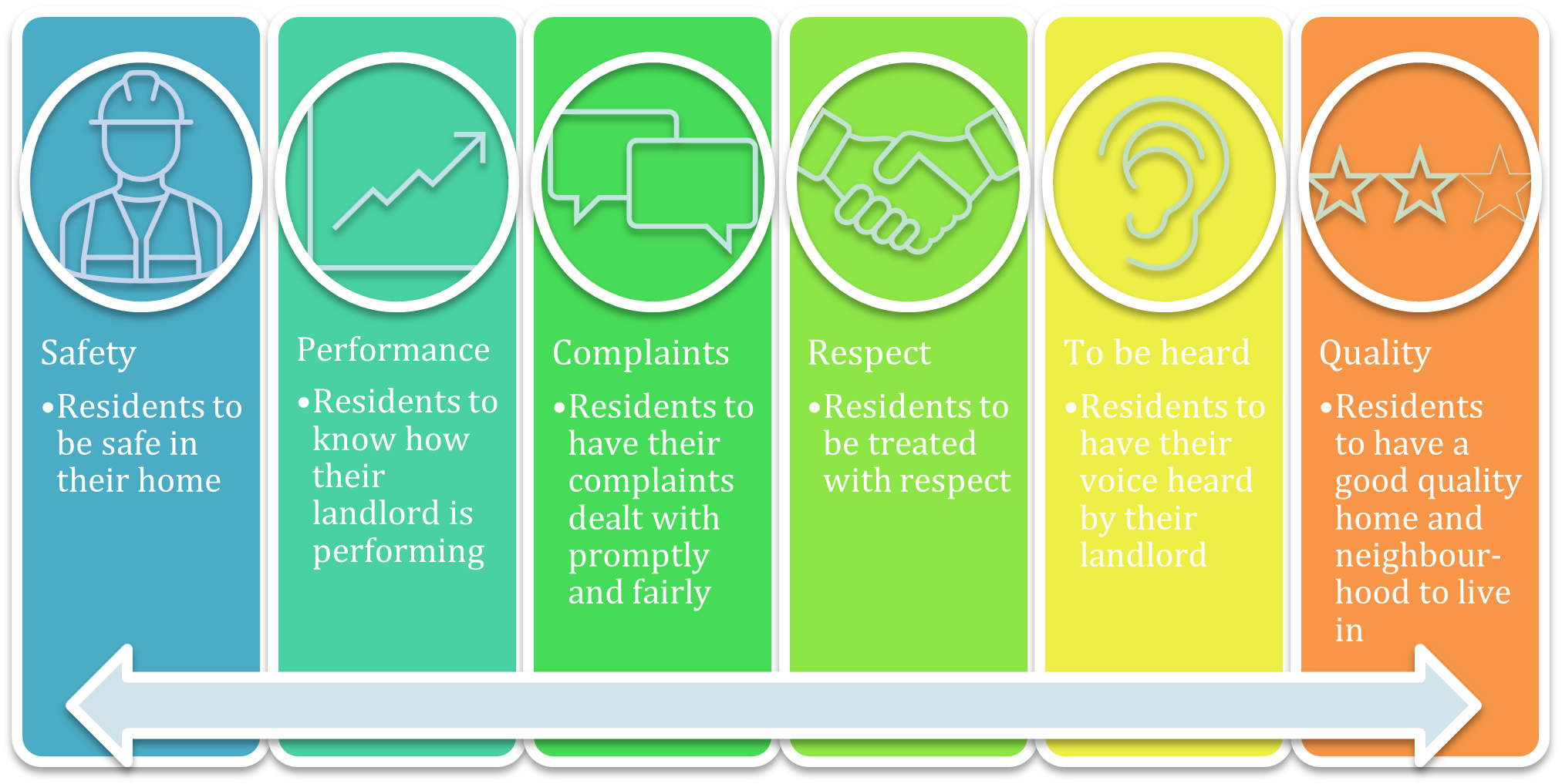
This peer challenge provides a framework for the host council to:
- Reflect upon and receive feedback on what is working well and what needs to improve in relation to the services provided to social housing residents.
- Reflect on how resident voice is incorporated into ways of working across the landlord function.
- Assist with the council’s ongoing work to ensure compliance with the consumer regulation regime focussed on strengthening the accountability of landlords for providing safe homes, quality services and treating residents with respect.
- Ensure a robust framework is in place for the delivery of a good quality landlord service.
- Identify and share best practice.
- Identify lessons learned for areas of challenge and apply them, as appropriate, across all main areas of housing service.
- Reflect on the programme of investment for social housing stock.
- Receive peer feedback on the service’s financial plans and capacity to deliver.
The peer challenge complements the regulatory inspection regime. It also covers areas that aren’t specifically mentioned in the consumer standards, but we believe are essential for providing a good, efficient landlord service. These areas of focus are the host council’s overall leadership, governance and scrutiny of the housing service and the council’s financial plans as well as their capacity to deliver improvements.
The SHPC is a valuable assurance and improvement tool that can help stock holding councils in their thinking and preparation for inspection or in supporting areas which require improvement following inspection. It can also support their work in sustaining or improving gradings given by the regulator.
Scope and purpose
The SHPC is designed to support the improvement of the council’s social housing function and can serve as a valuable tool to help ensure they are operating in line with the expectations set out by the RSH.
The focus of the SHPC at Thurrock Council has been determined in discussion with the council.
The peer team considered the following three areas which form the core components of all SHPCs. These provide a strong foundation for assessing the effectiveness and resilience of landlord services.
- Leadership, governance and scrutiny
- Finance and capacity to deliver
- Safety at home
Following discussion with the council, the following additional areas of scope were agreed:
- Resident voice and engagement
- Quality neighbourhoods and tenancy management.
The peer challenge process
Peer challenges are improvement focused; it is important to stress that this was not an inspection. The process is not designed to provide an in-depth or technical assessment of plans and proposals. The peer team used their experience and knowledge of local government to reflect on the information presented to them by people they met, things they saw and material that they read.
The peer team prepared by reviewing a range of documents and information to ensure they were familiar with the council and the housing challenges faced. This included a position statement prepared by the council in advance of the peer team’s time on site. This provided information on the local context at the council and what the peer team should focus on. It also included a comprehensive LGA Housing Revenue Account (HRA) finance briefing (prepared using public reports from the council’s website) and a LGA housing performance report outlining benchmarking data for the council across a range of housing related metrics. The latter was produced using the LGA’s local area benchmarking tool called LG Inform.
The peer team spent three days onsite at the Thurrock Council during which they gathered evidence, information, and views from more than 25 meetings, in addition to further research and reading. They spoke to over 100 council staff together with tenant representatives, councillors and external stakeholders and completed two site visits.