Executive summary
In February 2026 the government published its reforms to the SEND system in England as part of its White Paper, Every Child Achieving and Thriving. This review provides an independent analysis of the Government’s SEND reforms, informed by the views of local government captured through a survey and workshops.
SEND reform: putting children and young people first represents a genuinely transformational approach to improving outcomes for children and young people with SEND. The reforms have been designed as a system that is mutually interdependent. The success of the individual elements of reform depends on the implementation of the package as an integrated whole.
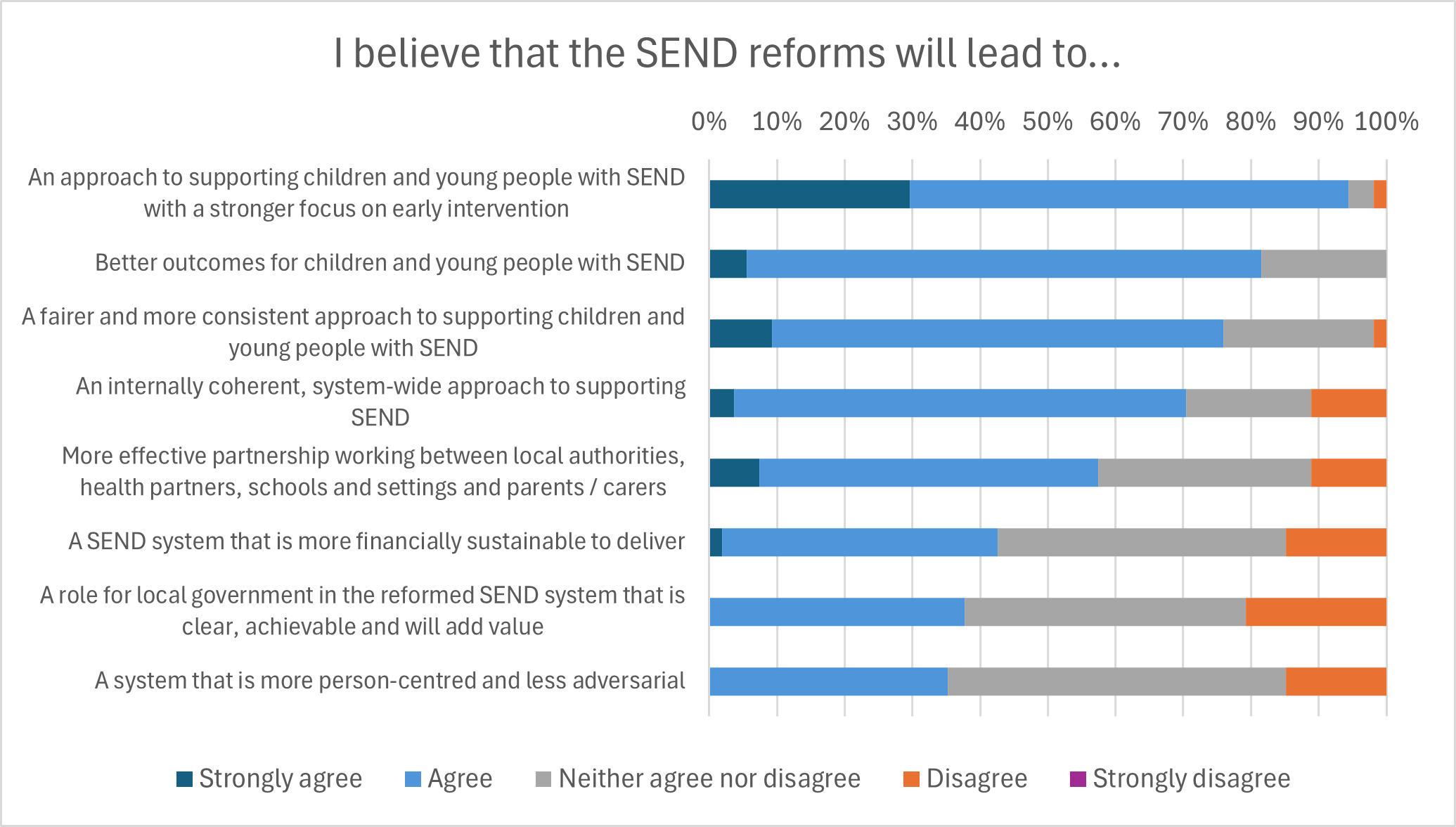
Local authorities reported a high degree of confidence that these reforms would lead to significant improvements. Over 90 per cent agreed that the reforms would lead to a stronger focus on early intervention and over 80 per cent agreed that the reforms would lead to better outcomes for children and young people with SEND.
The reforms set out a refreshing and explicit commitment to creating an education system with inclusion at its heart. Many local authorities felt that the emphasis on inclusion was one of the aspects likely to have the most positive impact. The acid test of the government’s commitment to inclusion will be the extent to which the government adheres to this when making decisions about policies and practice that affect all aspects of education.
The proposal to create National Inclusion Standards and an updated SEND Code of Practice will be critical in establishing greater fairness and consistency in the allocation of resources and provision. To be as effective as possible, the National Inclusion Standards will need to be concrete enough to provide a basis for holding the system to account and to provide clarity to parents and carers both on what they should expect in terms of provision, and on what they cannot expect.
The argument that the current statutory SEND system disincentivises early intervention has been made forcefully. The Government has put forward a bold and well thought through set of proposals to reform the statutory system that does not duck this core issue. The proposed reforms should enable a larger number of children and young people to have their needs met in their local school before they escalate, without the need for assessment or statutory plans, freeing up capacity and resources for earlier intervention and prevention. It should also ensure that finite specialist capacity is freed up for those who need it most.
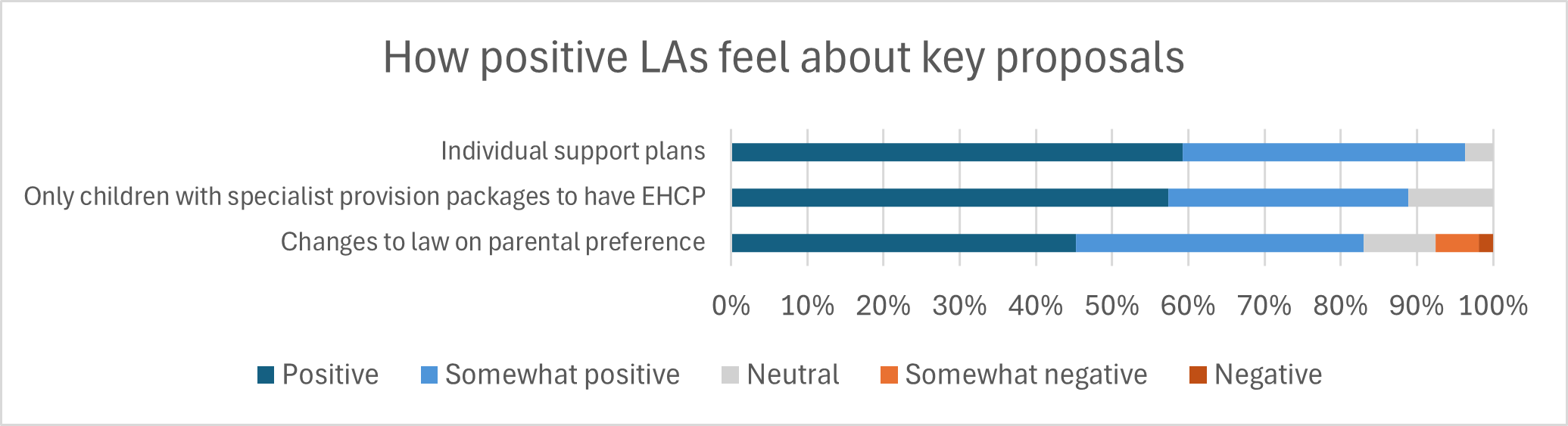
The changes to the statutory SEND system, in combination, were strongly welcomed by local authorities. 96 per cent said that they felt positive or somewhat positive about the introduction of individual support plans, 89 per cent said they were positive or somewhat positive about the changes to the threshold for EHCPs and 81 per cent were supportive on the changes to the law on parental preference.
In developing the detailed guidance and materials that underpin the reforms, the Department may wish to consider how to develop an approach to Individual support plans that builds on, and can be populated by, assessment for learning approaches used by the most effective schools; how to provide reassurance to parents that if there is a serious disagreement with a school about an ISP that cannot be resolved through the within school complaints process, that there is a swift and efficient way of resolving the dispute fairly and impartially; and how to frame the needs threshold for the specialist provision packages, and the new EHCP assessment process, in a sufficiently concrete and robust way to reduce variation between areas and reduce the scope for differences in interpretation.
The SEND reform consultation has set out a raft of measures designed to both develop the capacity for a more inclusive education offer in mainstream schools and settings and tighten up the accountability for inclusion. The changes to how funding is routed to mainstream schools and colleges; the introduction of additional funding targeted at inclusion; and the creation of the Experts at Hand offer together have the potential to transform how mainstream schools and colleges meet the needs of children and young people with SEND.
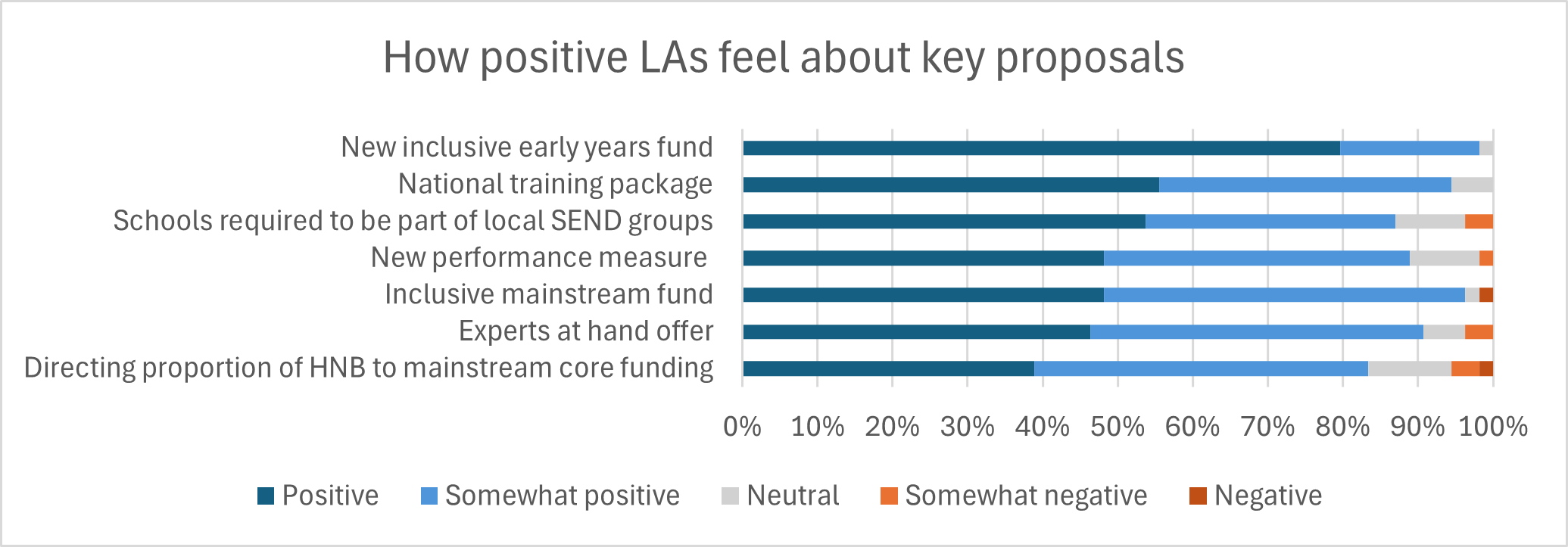
In the survey over 80 per cent percent of local authorities either felt positive or somewhat positive about all seven key proposals that focus on building the capacity of mainstream education settings to meet a wider range of needs. The main questions raised by local areas was whether the accountability mechanisms described in the SEND consultation would be sufficiently robust to hold schools to account for the inclusivity of their offer and their use of non-hypothecated funding; whether a single new performance indicator, that only applies to secondary schools, would be a sufficient counterweight to the broader performance framework that rewards excellence against a broadly academic curriculum; and how the Experts at Hand offer could be delivered given the difficulties in recruiting to key professions.
The proposed changes to the specialist sectors, including creating places in inclusion bases, developing specialist provision packages and regulating the market for INMSS, are important in enabling the current system to pivot more flexibly to meeting the rising demand for specialist placements, improving consistency and quality of provision and giving special schools and special bases greater funding stability to meet the planned needs of a cohort. Local areas registered a high degree of support for these proposals overall. The most significant caution in this area voiced by local authorities was that legislation to more strongly regulate independent special schools must be developed with a view to ensuring overall placement sufficiency.
It is encouraging that the SEND consultation places a much greater emphasis on resolving disputes through independent, locally commissioned mediation services and through an improved and clearer approach to school complaints. The reforms to the role and scope of the Tribunal represent a good balance between maintaining important protections for parental rights while limiting some of the more distorting effects of the current system. Overall, 80 per cent of local authorities felt positive or somewhat positive with the proposals around a reformed role for the SEND Tribunal.
A significant weakness of the current system is that there is a mismatch between statutory responsibilities, the powers to effect change, and accountability for outcomes. The SEND consultation takes some steps towards addressing these imbalances. It is encouraging that the consultation sees a critical strategic role for local area-based partnerships, and that Local Area inspection arrangements will be reviewed. However, this is a dimension of the reform programme where there is still more work to be done. Only 57 per cent of local authorities agreed that the SEND reforms would lead to more effective partnership working going forwards and only 37 per cent agreed that it would lead to a role for local government that was clear, achievable and would add value.
The role of the local authority as a convenor in the system remains somewhat poorly defined, without the powers to bring partners to the table, and the burden of responsibility and accountability for outcomes for children and young people with SEND still rests to a very large extent with local government. The engagement of health in strategic decision-making, provision of services and funding contributions were flagged by local areas as a major risk both in terms of the integrity of the overall system design, and around implementation and delivery of the vision. Local authorities have also expressed some concerns about how the different tiers of the system will work together, and the clarity of commissioning functions.
As well as asking local authorities to reflect critically on the strengths of the reforms and the elements which posed greatest concern, we also asked them to flag where they felt there were significant omissions. Four main areas were raised consistently. First is the lack of a compelling vision for how children and young people with SEND are to be supported to prepare for adulthood post-16, including opportunities for developing their independence and gaining understanding and experience of employment.
The second issue raised was the need for a strategic overarching workforce plan that sets out estimates of how many skilled practitioners, in which professions, and on what timescale will be needed, nationally, to deliver the vision set out in the SEND reforms. Thirdly, local authorities flagged the need for clear pathways for children and young people whose needs may not be SEND, but nonetheless will require additional support in order to thrive in learning, for example those requiring Alternative Provision or Education Other than at School (EOTAS).
Finally, home to school transport remains one of the most significant cost pressures on local government and at the same time, it is cited by parents as a lifeline to ensure that children and young people with SEND do not miss out on their entitlement to education. More radical consideration may need to be given to reforming statutory responsibilities for home to school transport in a way that strikes the appropriate balance of responsibility and cost between the state and the parent in supporting children and young people to get to school.
We asked local authorities to reflect on how confident they were in their capacity, and that of their partners, to deliver the reforms and to consider some of the challenges inherent in implementation. Overall, the very large majority of local authorities (87 per cent) were confident that they would have the capacity to deliver the reforms but less than half were similarly confident that their partners locally would have the capacity to deliver. This chiefly reflected concerns about the capacity of health partners, and to a lesser extent mainstream schools, to deliver on the expectations of the new vision.
The biggest underlying risk to implementation is how to start creating the capacity for better support and earlier intervention whilst the whole SEND system is stretched, in some areas almost to breaking point, in managing the current level and complexity of demand. The perverse incentives that militate against better inclusion and the limits to effective decision-making that characterise the existing statutory framework remain in place until legislation changes.
The challenge of building one system while running another, leads to the strange perception that the timelines for implementation are both simultaneously too ambitious and too slow. 43 per cent of local authorities thought that timescales were too ambitious. This reflects the sheer volume of change that is anticipated in a short period of time. However, 20 per cent of respondents felt that timescales were too slow; the long lead-in time for legislative change means that progress to those aspects of the reforms on which system transformation ultimately depends feel frustratingly sluggish.
The long gap between the publication of the reforms and the enactment of new legislation leaves the SEND system peculiarly vulnerable in the interim period. A significant minority of the local authorities that attended our workshops reported a surge in demand for EHC needs assessments in the last couple of months since the white paper was published. There is a risk that by the time the legislation comes into force the number of children and young people with EHCPs may have vastly outstripped the government’s current growth projections for the next three years.
It is not just the challenge of continuing to manage the existing statutory demands of the SEND system that is likely to test the capacity of local authorities to deliver during this period, but the sheer weight of concurrent reform impacting on education and children’s services simultaneously. Families First, Best Start in Life, ICB reforms, a new inspection framework and curriculum changes form the backdrop against which the SEND reforms are introduced. For a minority of local authorities, the seismic upheaval of Local Government Reform will only serve to compound these difficulties.
While the injection of additional funding to support the reforms is significant and welcome there remains a concern that the financial pressures of the existing system will prove to be overwhelming and that the considerable upfront investment, once distributed out between individual local authorities, schools and settings will not be enough to leverage the quantum shift that the reforms are promising and parents and young people are expecting. In response to our survey, less than a quarter of local authorities were confident that they would be able to fulfil their statutory duties and support transition within the funding envelope available over the next three years. However the percentage who felt confident that they would be able to deliver their statutory duties post legislation within the funding envelope provided was much higher.
Finally, and perhaps most importantly, successful implementation of the reforms will require the trust, engagement and ongoing confidence of parents and carers to be successful. What central and local government, with schools and health partners, can do together over the next three years to change for the better the daily experience for children and young people with SEND, and by extension for their families, will be critical to the successful delivery of these reforms.
Introduction
In February 2026 the government published its much-anticipated reforms to the SEND system in England as part of its White Paper, Every Child Achieving and Thriving. Following this publication, the LGA and CCN commissioned us to carry out an analysis of the reforms to examine the extent to which they address the fundamental challenges in the SEND system. In doing so, we have built upon our 2024 research, Towards an effective and sustainable approach to SEND in England, also commissioned by the LGA and CCN, and used that as a lens through which to view the government’s proposals. In parallel, we conducted a short survey of local authorities and ran five online workshops with senior local officers to gauge the local government response to the reforms. The survey attracted 54 responses and over 50 different local authorities were represented at the workshops. This publication therefore provides an independent analysis of the reforms set out in SEND reform: putting children and young people first, informed by the views of local government captured through the survey and workshops.
An opportunity for genuine change
SEND reform: putting children and young people first represents a bold approach to achieving real system transformation. The Government’s analysis of the crisis in the current SEND system does not shy away from uncomfortable truths and the proposed reforms provide a set of credible solutions to the deep-seated and fundamental challenges that beset the current SEND system. This presents a golden opportunity to genuinely improve learning and outcomes for children and young people with SEND.
An important strength of the reforms is that they have been designed as a system that is mutually interdependent. As these proposals make their way through consultation, and the process of legislation, there will be opportunities to refine, build on and improve them. However, Government, partners and stakeholders should resist the temptation to cherry-pick from the suite of proposals in the belief that they represent a menu of options. They do not. The success of the individual elements of reform depend on the implementation of the package as an integrated whole.
Local authorities that we engaged in this research reported a high degree of confidence that these reforms would lead to significant improvements. Over 90 per cent agreed that the reforms would lead to an approach to supporting children and young people with SEND with a stronger focus on early intervention. Over 80 per cent agreed that the reforms would lead to better outcomes for children and young people with SEND. Over 75 per cent agreed that the reforms would lead to a fairer and more consistent approach to supporting children and young people with SEND. These results should be contrasted with the survey we ran for our 2023/24 research in which over 97 per cent of respondents (across local authorities, schools and parents) disagreed with the statement that the current SEND system is working well and supporting children and young people to achieve good outcomes and 96 per cent disagreed with the statement that the current SEND system is fair and equitable in providing support for children and young people with SEND.
In the sections that follow we try to encapsulate the key system challenges that are prevalent right now, and how well the proposed SEND reforms address those challenges. As it is the start of the reform journey, there are inevitably areas where more detailed proposals will need to be developed. Based on insights from local authorities and our own analysis this report draws attention to some of those areas where additional focus may be helpful, with a view to helping the Government think through transforming the system and building consensus. The report also shines a spotlight on some of the very significant risks to successful implementation that are contingent on delivering a once-in-a-generation transformation programme at a time when existing capacity is stretched to breaking point in maintaining a flawed set of statutory responsibilities. The key will be creating a framework for shared accountability and meaningful partnership; building the confidence and trust of parents and carers; creating inclusive capacity in advance of legislative change; and engaging in workforce planning at a system level to ensure that there are the right people, with the right skills and capacity to deliver the ambition and scale of this reform.
National vision – creating an education system that is inclusive by design
Through our research on the SEND system, we have consistently heard from stakeholders that national rhetoric matters. It sets the tone for what is valued by the education system as a whole, and influences decisions from national policy to local implementation. The 2011 green paper set out the then government’s aim to ‘end the bias towards inclusion’. Since then, the value of “inclusion” and how we equip mainstream settings to include and support children and young people with SEND has not featured prominently in the debate about our education system. The argument that many children and young people with SEND achieve better outcomes in an inclusive mainstream school than they would in a special school has, for at least the last decade, been missing entirely from the national debate. Furthermore, the achievements of the education system that we have tended to laud nationally, such as improved performance against a relatively narrow academic curriculum, have often incentivised schools, settings and colleges not to include those with SEND, rather than the reverse.
Against this backdrop, the inclusive vision set out in SEND reform: putting children and young people first is a breath of fresh air. The vision states:
We have a clear objective: children and young people who can achieve and thrive in mainstream education will be supported to do so; and children and young people who need specialist support will receive it promptly and with dignity, clarity and care.
We will build an education system where inclusion and high standards are two sides of the same coin.
Every child deserves high-quality, inclusive education close to home, where they can learn, make friends, and participate in their community. To make that happen, we want to take the best of the SEND system and make it part of the mainstream, so that we have one education system, not two parallel ones.”
These are statements that are front and centre in the reforms. They are made in the first two paragraphs of the executive summary and set the tone for the whole document. It is also encouraging that the government is robust in setting out the evidence for the benefits of an inclusive mainstream education. It states:
The evidence is compelling: children and young people learning alongside their peers has proven academic and social benefits for all children. Pupils with SEND who are educated in inclusive mainstream schools are twice as likely to find employment and live independent lives compared to those with similar needs in special classes.”
Setting out a bold and explicit commitment to creating an education system with inclusion at its heart is the foundation on which the reform agenda sits, and the touchstone against which the impact of the reforms can be measured. This change of vision, rhetoric and national direction was recognised and valued by local authorities. Many of those who responded to our survey highlighted the emphasis on inclusion as a central tenet of the reforms as one of the aspects likely to have the most positive impact:
The proposed reforms have the potential to deliver significant, system wide improvement when they are anchored in a clear cultural commitment: children and young people with SEND belong in their local schools."
From a local authority perspective, the most impactful elements of the Schools White Paper are those that rebalance the system towards inclusion, early intervention and shared local responsibility, while recognising the essential convening role of councils.”
The acid test of the government’s commitment to its new national vision of an inclusive education system will be the extent to which the government adheres to this commitment when making decisions about policies and practice that affect all aspects of education, rather than just those that are chiefly focused on the education and outcomes for children and young people with SEND. So, for example, when considering future changes to examinations and the curriculum, to teacher recruitment, training and retention, to performance and quality standards for academy trusts, to policies on behaviour management in schools or to the design of school buildings, will the government continue to place its belief in an inclusive education system front and centre in policy design, in the same way as it has done in this consultation?
Creating consistency, equity and fairness
A fundamental weakness of the current SEND system is that it fails to set out with any degree of clarity what the state can and should offer to children and young people with SEND. There are no clearly defined national expectations of what should be available to children and young people with SEND in all mainstream settings, schools and colleges. The threshold for requiring an Education Health and Care Plan is poorly defined and open to considerable breadth of interpretation. There is no national definition for the needs of children and young people who might most benefit from education in a special setting. This leads to very significant variation in the provision that children and young people with SEND receive both within and between different local areas, contributing to parents’ experience that there is a “postcode lottery”. It leads to confusion and frustration among parents and carers who are unclear what their children are entitled to, or how to get the best for their children from a SEND system that feels opaque and hard to navigate. It leads to a very unequal playing field in terms of mainstream schools and their ability, capacity and willingness to provide excellent education for children with additional needs. Finally, it fuels a system based on adversarial interactions around poorly defined thresholds, that necessarily advantages those families with the capacity and wherewithal to advocate strongly for the support their children need.
In this context, the government’s proposal to create National Inclusion Standards “which will set clear, evidence-based guidance for the Universal offer, as well as what Targeted, Targeted Plus and Specialist layers of support should look like across the 0-25 system” is critically important. The National Inclusion Standards will be supported by an updated SEND Code of Practice. The ambition is that the new Code of Practice will clarify expectations on education settings and local partners and move away from categorisations based on diagnoses towards areas of development that will support early and dynamic needs-led provision. So much of the existing SEND system is enshrined within primary legislation and the provisions set out in the 2014 Code of Practice, meaningful change will depend very heavily on the detail of this new Code of Practice. The emphasis in the proposals on the code of practice becoming much more practical and rooted in the actions that schools, settings and colleges can deliver in the classroom is particularly welcome. It is described as “an organising framework around which educators can structure and build their knowledge of actions that they can take in the classroom or setting to support a child to progress.”
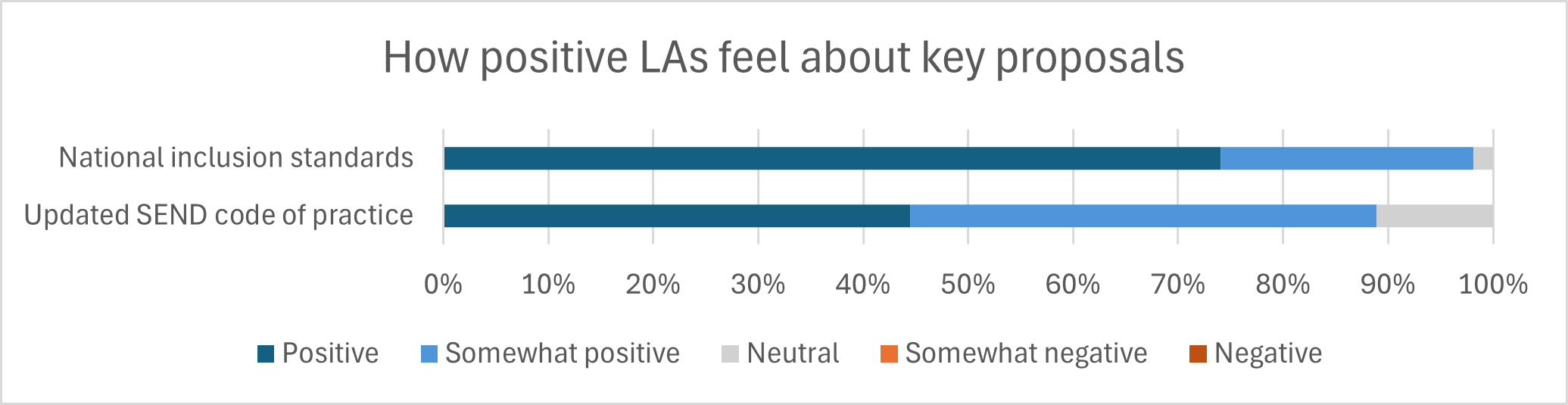
Again, this is an element of the reforms that many local authorities have strongly welcomed. As shown in the chart below, 98 per cent of local authorities that responded felt either positive or somewhat positive about the proposal to introduce national inclusion standards and 8 were positive or somewhat positive about the updates to the SEND code of practice. None of those replying to the survey responded negatively to either of these proposals.
Many local authorities replying to our survey identified the introduction of the National Inclusion Standards as one of the areas of the reform most likely to deliver a positive impact.
National Inclusion Standards will set clear national expectations for inclusive practice, teacher training, curriculum adaptation, and assessments, promoting a more equitable mainstream system."
The inclusion standards, if shaped well, will have a significant impact on meeting the needs of children and young people, as it will set out in law what schools must do to support them. This will afford a consistent approach to supporting SEND across the country."
National Inclusion Standards – will even out inconsistencies and ensure there is a clear universal benchmark."
We are optimistic about the development of National Inclusion Standards defining what good universal, targeted, and specialist support looks like across 0–25. Clear, consistent standards will ensure equity and clarity – families should expect a similar SEND support offer in any school in England. For local authorities, national benchmarks can help us hold all providers accountable and share best practice. Consistent standards across all settings will also aid joint working, as everyone will be working to the same framework of support. In short, defined inclusion standards will drive consistency and fairness, making the system less of a postcode lottery."
In order to be as effective as possible, local areas have argued that the National Inclusion Standards will need to be clear, rooted in evidence and actionable by schools and settings. They will need to be secure and concrete enough to provide a basis for holding the system to account and to provide clarity to parent and carers both on what they should expect in terms of provision, and on what they cannot expect. In general, local areas were keen for definition of the standards and the detail of the new code of practice to be brought forward as quickly as possible to help to define the various levels in the new system as implementation gets underway.
There were some concerns voiced by a small number of local authorities about the proposal to remove mental health from the area of need that was previously SEMH, and what that might mean in practice for the availability of mental health support for those children and young people who require it. This formed part of two larger concerns: one around the systematic engagement of health partners in the reforms, and the second about the support for children and young people whose learning and participation was affected by needs that are primarily medical or health-based. These two broader themes recur at different points throughout this analysis.
Breaking the vicious circle of late intervention
We have argued strongly in our previous research that the design of the statutory SEND system itself is one of the factors contributing to the accelerating rise in demand for support for children and young people with SEND. We have described in our previous reports the perfect storm of factors that have led to a hollowing out of SEND support, which creates a strong system incentive to seek an EHCP for a child. This in turn leads to resources, capacity and funding being concentrated in the creation of the plan itself and in support for the cohort of children and young people above the statutory threshold, leaving less capacity available for earlier intervention. A vicious cycle then ensures. While all the evidence points to early intervention being the key to better outcomes, we have a system that increasingly delivers late intervention in response to crises in learning.
In addition, we have argued that EHCPs, with the backing of the SEND Tribunal, create inequalities and distortions in the placement decisions for children and young people with SEND that are neither conducive to an inclusive education nor financially sustainable. In essence, the design of the current statutory system means that it is not possible to ensure that the finite number of places in special provision are allocated to the children and young people with the most complex needs and creates an ever-increasing demand for special placements that cannot be met within the state-funded sector. On the flip-side, the system of “consultations” can create challenges in securing a mainstream place for a child or young person with an EHCP, even where that is the parent’s preferred option, and contributes to the very uneven distribution of pupils with EHCPs between mainstream schools, even taking account of differences in catchment.
However, having argued that it will be impossible to reform the current SEND system for the better without changing the statutory system around EHCPs, it is critical to remember that EHCPs continue to perform an important function in the current system – they provide children and young people with SEND with legal protections that they would not otherwise have. The challenge for the Government’s current reform proposals, therefore, has been how to continue to afford children with SEND those vital protections, while also freeing up the capacity of the system to provide earlier intervention, ensure that support is available where the child is and when the child needs it (without having to battle through an adversarial, time-consuming and resource intensive assessment and planning process) and provide parents with voice and agency while creating greater equity and equilibrium in the system.
The solution that the reforms pose to this conundrum is strong. It does not, as previous attempts at reform have done, duck the core issue or tinker around the edges. Instead, it sets out a significantly different approach which has the following key elements:
- A greater number of children and young people with SEND will have their needs met in mainstream schools, through the Universal, Targeted and Targeted Plus layers of support.
- Children and young people receiving Targeted and Targeted Plus support will have their needs and support recorded in digitised Individual Support Plans.
- A statutory duty will be placed on schools and colleges to produce an ISP for children and young people with SEND. There will be a requirement for ISPs to be reviewed annually at a minimum, and settings will work with parents and young people to develop their ISP from the start.
- Where there are concerns about provision, parents and young people will be able to resolve this directly with the setting, including making use of the improved schools complaints process.
- Only those children and young people who need the support set out in a Specialist Provision Package will have their provision set out in an EHCP in future (alongside an ISP).
- These will be based on an LA-led assessment against nationally defined criteria.
- Where a young person or parent with an EHCP indicates a preference for a mainstream setting, there will be strong legal duties on local authorities to make this happen.
- Local authorities will provide parents and young people with a list of settings able to provide the Specialist Provision Package. Parents and young people will have the right to choose any of these settings or express a preference for an alternative. Decisions will be made based on this preference as well as evidence of effectiveness, good value, and the needs of other children.
In combination, this set of proposed reforms should enable a larger number of children and young people to have their needs met in their local school before they escalate, without the need for assessment or statutory plans, freeing up capacity and resources for earlier intervention and prevention. They should also ensure that finite specialist capacity is freed up for those who need it most. Parents of those children with needs that require a specialist package will still be able to express a preference for a school place (including a continuing presumption to mainstream) but that will be weighed against other legitimate considerations in final decision-making. For children and young people with ISPs moving through standard admissions routes, the ability of mainstream schools to deny a place should be removed, thereby creating a fairer and more equitable inclusive landscape. This new system should therefore go a long way towards breaking the vicious circle of late intervention described above.
These reforms, in combination, are some of the most powerful described in the consultation, and this is recognised by local authorities. 96 per cent said that they felt positive or somewhat positive about the introduction of individual support plans, 89 per cent said they were positive or somewhat positive about the changes to the threshold for EHCPs and 81 per cent were supportive on the changes to the law on parental preference.
In recognising their potential impact, local authority officers said:
The most significant potential impact comes from the proposed shift to a clearer, tiered SEND support model, with an explicit expectation that the majority of children’s needs are met effectively within mainstream settings, and statutory plans being reserved for the most complex cases. This approach addresses longstanding challenges of inconsistency, late intervention and escalating EHCP demand."
ISPs standardise how schools plan and track support, improving consistency and ensuring needs are identified and met quickly—before an EHCP becomes necessary. By limiting EHCPs to children requiring a Specialist Provision Package, reforms aim to reduce bureaucracy, speed up decisions, and ensure resources are focused where they are most needed.”
Earlier, tiered support through Individual Support Plans because earlier intervention is effective, reduces pressure on families and more consistency and transparency around what schools should do will reduce the financial drive for EHCPs from ineffective schools.”
The shift toward strengthening inclusive practice in mainstream settings feels like the most significant element to me, and the one most likely to make a lasting difference. The over-reliance on EHCPs as the main route to support has put enormous pressure on families, on local authorities, and frankly on the plan itself — which was never designed to carry that weight alone.”
There was also broad support for the proposal to produce a standard digital format for ISPs and EHCPs with many local areas commenting that this would have the potential to increase transparency, consistency and equity, reduce workload and provide a vital aid in transitions.
However, these reforms also represent some of the more contentious changes, in terms of wider stakeholders, and some of the most critical to get right. Many of the questions and concerns posed by local authorities revolved around:
- How to avoid ISPs becoming an industry in their own right, simply replicating many of the characteristics of EHCPs that have overburdened the current system, or creating a set of bureaucratic expectations that schools struggle to meet.
- Whether ISPs will give parents sufficient confidence that their children’s entitlement to support will be delivered, and whether they will provide a means to hold schools, colleges or the wider education system to account for when those entitlements are not sufficiently well-delivered.
- How to avoid the assessment process and threshold for future specialist support packages becoming a new battleground within the SEND system.
The quotes below from local authority survey responses illustrate some of these concerns:
Individual Support Plans becoming a parallel bureaucracy. Schools do not understand the current expectations around annual reviews. This feels similar in terms of recording and reviewing. There is a risk that this adds another layer of process, increasing workload for schools rather than simplifying the system.”
The key to success will be securing parental confidence and ensuring that everyone is signed up to the new reforms. A legal footing to Individual Support Plans will be necessary to secure that confidence. Currently, one of the main concerns is that children receiving SEN Support do not have a ring-fenced budget and therefore funding is not secure to that child. Whilst this will be monitored by Ofsted, inspections take place every few years. How will schools be monitored more regularly to ensure funding is being used for ISPs and this is effective for supporting children with SEND.”
The shift from EHCPs to Individual Support Plans for the majority of children is one of the most significant changes in a generation, and the removal of tribunal rights for ISP decisions — however well-intentioned — will feel to many families like a weakening of the protections they have fought hard to secure.”
The department has acknowledged in the consultation that, understandably, the detail of some of these proposals have still to be worked through. In developing the next level of content, the Department may wish to consider:
- How to create an ISP plan template that builds on, and can be populated by, assessment for learning approaches used by the most effective schools. It is likely that the more ISPs can form part of the daily fabric of effective teaching and learning, and the less they become a separate and self-serving entity, the more likely they are to be done well and to lead to better outcomes for children and young people.
- How to provide reassurance to parents that if there is a serious disagreement with a school about an ISP (that either does not meet the expectations set out in the national standards or is acceptable on paper but is not being delivered in reality) and the disagreement cannot be resolved through the within school complaints process, that there is a swift and efficient way of resolving the dispute fairly and impartially.
- How to frame the needs threshold for the specialist provision packages, and the new EHCP assessment process, in a sufficiently concrete and robust way to reduce variation between areas and to greatly reduce the scope for wide differences in interpretation that may lead to an increase in disputes.
Incentivising and creating capacity for inclusion in mainstream schools and settings
The vision set out clearly in the consultation, to enable more children and young people’s needs to be met effectively in an inclusive mainstream school or setting and without the need for a statutory plan, cannot be achieved simply by asking schools to do more within existing knowledge and resources. It is essential to build the capacity and skills of mainstream schools, settings and colleges to meet the common and predictable needs experienced by children and young people and to rebalance the system of incentives and accountabilities which currently leaves leaders of many schools, colleges and early years providers feeling that they are inclusive despite the wider expectations of the education system. The SEND reform consultation has set out a raft of measures designed to both develop the capacity for a more inclusive education offer in mainstream schools and settings and tighten up the accountability for inclusion. These can broadly be summarised as:
- Building the skills, expertise, and direct support for inclusion – through the development of the Experts at Hand offer, investment of £1.6 billion in a mainstream inclusion fund, and investment of £200 million in a national training programme for all staff.
- A new cohort-based approach to funding for SEND in schools, settings and colleges – with a proportion of the current high needs block routed through mainstream school and college core funding on a formula basis, changes to Early Years SEND funding, and a new requirement for schools to pool SEND funding in local partnerships.
- Changes to accountability framework to incentivise inclusion – with new statutory responsibilities for schools and colleges, performance measures to identify schools that are enabling pupils who start from a lower baseline to make good progress and a stronger focus on inclusion in the Ofsted inspection framework.
There are several important and powerful elements to the reform agenda which fall under this banner. First, it is very welcome that during a period in which public finances are constrained, investment has been set aside to kick start a new inclusive offer for families. It was always going to be necessary, and we argued strongly for this in our 2023/24 research, to find the financial headroom to strengthen the offer of earlier intervention before making changes to the existing pattern and system of support. It is important that this sequencing has been recognised in the SEND consultation.
Secondly, the changes to how funding is routed are very significant and have the potential to transform how mainstream schools and colleges meet the needs of children and young people with SEND. Currently the system of EHCPs and top-ups means the funding is hypothecated to individual children and often tied to a set of inputs or provision outlined in the plan, which may not be deliverable within the funding envelope on offer. It provides little scope for schools and colleges to use the funding available flexibly and creatively to meet the needs of their whole cohort of children and young people with SEND. Furthermore, the process of applying for an EHCP then waiting for the assessment and plan development to be completed can often leave schools for half an academic year or more trying to support a child with significant needs from within their own resources without any additional resource. The proposals set out in the consultation address these challenges head-on. Money that currently forms part of the High Needs block will be diverted into school and college core budgets so that they have the resource, up front, to plan for and deliver the support in the most effective way that meets the needs of all their children and young people with SEND.
The SEND reform proposals also commit to consulting on funding mechanisms in the early years in order to move to a cohort-based funding model for supporting children and young people with SEND in early years settings. This, alongside the new Early Years inclusion Fund which is coming onstream this year, is a very welcome innovation that will allow for effective support at the very start of a child’s education journey. Given that high needs funding in the early years is less bound up with practices enshrined in primary legislation, it may be possible to push ahead with some elements of early years reform further and faster, in advance of the main legislative timetable.
Thirdly, the Experts at Hand offer provides an avenue to significantly increase access to additional multi-agency knowledge and expertise to support children and young people with SEND. It will also provide a vehicle for harnessing the expertise within the special school and AP sector to make this more readily available to mainstream schools and settings. The Experts at Hand concept has the potential to boost system skills and capacity in three main ways – by providing whole-setting training and development; by modelling and scaffolding effective interventions with individual teachers and teaching assistants as part of a structured approach to CPD; and by offering direct support within the classroom to children and young people either individually or in small groups
Again, local authorities have both recognised the importance of these measures and highlighted some of the ways in which their impact might be secured. In the survey over 80 per cent of respondents either felt positive or somewhat positive about all seven key proposals that focus on building the capacity of mainstream education settings to meet a wider range of needs.
Local authorities reflected the potential positive impact in the following ways:
Structural change is bolstered by a commitment to professional development, where providing our teachers with direct access to therapists and Educational Psychologists transforms school-level confidence into a competent, multi-agency reality.”
Workforce Training and “Experts at Hand” Support: The proposal to roll out a new national inclusion training package for staff across early years, schools and colleges, alongside the “Experts at Hand” offer is very positive. Coupled with better access to specialists on a consultative basis, this will empower mainstream schools to meet needs earlier and more effectively. These measures should improve expertise on the front lines and reduce the escalation of needs.”
The substantial new funding streams (e.g. the £1.6bn Inclusive Mainstream Fund and the proposed Inclusive Early Years Fund) aimed at boosting inclusion in early years, schools, and colleges…These funds, if distributed fairly, should help schools intervene promptly without waiting for an EHCP or diagnosis, by providing resources for support and staffing in mainstream settings.”
Funding formulas that allow mainstream schools to be creative in meeting needs.”
While building the capacity for mainstream inclusion was the element of the reforms that local authorities cited most frequently as likely to have the greatest positive impact for children and young people it was, conversely, also one of the areas where local authorities voiced most concern. This no doubt reflects the fact that it is such a lynchpin of the reforms and so important to get right.
The main question raised by local areas was whether the accountability mechanisms described in the SEND consultation would be sufficiently robust to hold schools to account for the inclusivity of their offer and their use of non-hypothecated funding. This was a particular concern in a devolved system where local authorities lack the direct means to hold schools to account. Many reflected that Ofsted inspections only come around once every four years and that the outcomes of some of the first inspections under the new framework suggested that the inclusion judgement may not set a high enough standard. Furthermore, while inspections can be very effective at evaluating the quality of provision within a school they may be less effective in determining whether a school has been engaging in non-inclusive practices to avoid admitting children and young people with more complex needs.
Alongside inspections, some local authorities questioned whether a single new performance indicator, that only applies to secondary schools, would be a sufficient counterweight to the broader performance framework that rewards excellence against a broadly academic curriculum. While it is encouraging that the SEND consultation and White Paper reference the planned changes to the curriculum in response to the curriculum review, there is some significant doubt whether these changes yet go far enough to provide schools with the curriculum flexibility they might need to deliver a truly inspiring learning offer to children and young people with a much wider range of complex needs.
If funding goes to schools how will they be held accountable? Whilst the current Ofsted scorecard contains inclusion I am unsure this will be enough based on inspections that are taking place.”
The perverse incentives to exclude formally and informally and/or to discourage SEND families from applying for school places remain - reforms to the accountability framework are not nearly robust enough to mitigate.”
A significant concern is the lack of clear, effective mechanisms for local authorities to hold Multi‑Academy Trusts to account, particularly large MATs operating across multiple local areas. While councils retain statutory responsibility for safeguarding, SEND sufficiency, attendance and inclusion, they often lack commensurate levers to influence MAT behaviour or challenge practice where it is not aligned with local priorities. This creates a fundamental accountability gap: councils are accountable for outcomes yet cannot always ensure that all schools are playing their full role as place‑based partners.”
The accountability framework for schools (Ofsted, performance measures) should be aligned so that inclusion efforts are recognised, in particular around outcomes (curriculum flex) and attendance. Our concern is that if mainstream inclusion is enforced without adequate preparation, it could backfire into increased exclusions or pushback from schools.”
There is a related concern which did not come through as strongly in the local authority feedback, but which we have identified through our analysis, and this is the ability of funding formulae to adequately reflect true levels of need within a school or college and therefore match the power to spend with the need to spend. This is a particular risk given that we know the distribution of children and young people with additional needs is currently very unequal, even between schools serving similar catchments. Formula-funding mechanisms will always be at best a proxy for actual levels of need, and there is no way around this without creating perverse incentives at a system level. The SEND consultation acknowledges this and posits the mandatory pooling of a proportion of high needs funding in local school partnerships as a mechanism for smoothing out inequalities. This is a promising concept but will arguably require a level of partnership maturity, as well as comprehensive coverage of all schools, to be effective. As a bridge to the future model, or potentially to run alongside it, there may be value in Local Area Partnerships diverting a proportion of their high needs funding to support schools that are disproportionately inclusive and include more children with a greater level of complexity of need than other schools locally.
Local authorities also voiced some concerns about the Experts at Hand offer. Some of these focused on design and others on deliverability. The design-led concerns raised the issue of how to most effectively combine the expertise that specialists deploy with the different, but equally valuable, expertise that mainstream teachers have in pedagogy within a mainstream environment. Others were concerned about how, structurally and conceptually, Experts at Hand might sit within their broader graduated response and inclusion support offer.
However, design-led concerns were in the minority compared with the large number of local areas that raised issues around the deliverability of the offer. Notwithstanding the pledge in the SEND consultation to train and recruit more Educational Psychologists, the challenge remains that the key professionals who will be needed to fulfil the Experts at Hand offer are in chronic short supply across the country. Vacancies in educational psychology, speech and language therapy, occupational therapy and child and adolescent mental health are legion and there is no readily available pool of new recruits on which to draw. The underlying catch-22 is that the time of the SEND specialist workforce is very significantly taken up with servicing the industry of assessing and providing advice for EHCPs. Only by reducing demand for statutory plans will it be possible to free up the time of the existing workforce, and the expertise of this workforce is needed to build the offer of inclusion that might, over time, reduce the need for statutory plans.
The thing I am most concerned about is the workforce. The government's ambition to put Experts at Hand in every school – educational psychologists, speech and language therapists, specialist SEND teachers – is the right ambition. But right now, those experts simply don't exist in the numbers the reforms are going to need. Over half of all educational psychologists say they feel unable to support children and young people with their current workload, and the vast majority report that children in their local authority don't have fair and equal access to their services. The training pipeline is a particular concern.”
Workforce challenges across the system and how the experts at hand – if not executed properly – could disempower schools.”
Finally, while the recommendations related to Early Years provision are very welcome, including the roll out of the Early Year Inclusion fund, access to training and the Experts at Hand offer, a stronger focus on sufficiency planning, and investment in SEND practitioners in Best Start in Life family hubs, there is arguably scope to move further and faster towards an inclusive reform agenda in the early years. There is, moreover, a strong incentive for doing so as the impact of earlier intervention at this stage of a child’s development is well documented and furthermore a very high percentage of new EHCPs are created in the transition from nursery to reception year. Our 2025 publication for the LGA, Rising Needs in the Early Years, sets out further detail in this area.
Going forward, in developing the detail of the reform, Government may wish to consider:
- Whether there are additional means to strengthen the incentives for inclusion, and the corresponding accountability mechanisms to ensure that schools pivot towards the vision set out in the consultation. This could include, for example, how inclusion in reflected in the new quality standards for multi-academy Trusts and how Regions Group within the DfE challenges academies that are not sufficiently inclusive.
- Looking at the full range of potential curriculum flexibilities that would give schools the opportunity to offer a meaningful and engaging education offer to children and young people with a much wider range of special educational needs.
- Whether any effective models currently exist for releasing time of the existing SEND specialist workforce from carrying out assessments and providing advice on EHCPs in order to use that capacity in support of more inclusive mainstream practice.
- How to further develop inclusive practice in the early years sector, in advance of legislative reform and responding sensitively to the diverse nature of the sector in terms of capacity and scale.
Developing a more stable and coherent special sector
The counterpoint to developing a more inclusive mainstream education offer is creating a more stable and equitable specialist sector that has sufficient capacity to:
- meet the needs of those children and young people who require a specialist education and
- provide expertise, via outreach and in-reach, to the mainstream sector.
A key goal of the reforms, in the words of the SEND consultation is “children and young people who need specialist support will receive it promptly and with dignity, clarity and care.”
The current overriding challenge in the system on the demand side is that state-funded special sector is overwhelmed – in 2024 there were 6,500 more children and young people in state-funded special schools than there were places available. The constraints around creating new provision mean that supply cannot keep up with demand, and increasingly local authorities are forced to turn to high-cost (and at times poor quality) places in the INMSS sector to meet the shortfall. The compounding effect of parental preference on placement decisions described earlier in this report exacerbate these pressures.
On the supply side, a key challenge is around funding stability and predictability. The place plus top-up funding model has left some special schools without a sufficiently predictable funding base to enable them to plan their provision and staffing, and the variety and complexity of needs of the children and young people in their care can lead to increasing use of exceptional funding. The unpredictability of health contributions to special school provision compounds these difficulties.
The key changes to the specialist sector planned as part of the reform programme include:
- The creation of tens of thousands of new places in Inclusion Bases in mainstream schools. These will be funded through a £3.7 billion capital investment programme and will include a proportion of specialist bases, commissioned by the local authority to deliver specialist support.
- The development of seven specialist provision packages. These will be design by an expert panel and nationally determined, based on needs. They will be linked to a nationally set costing framework based on the provision outlined in the Package, to ensure consistency of provision across the country and they will be matched to children and young people by a new LA-led statutory needs assessment process.
- Bringing forward legislation to ensure that local areas pay a reasonable price for placements in ISS and bring the duties and oversight of ISSs into line with other special schools.
These reforms are important in enabling the current system to pivot more flexibly to meeting the rising demand for specialist placements, improving consistency and quality of provision across the specialist sector and giving special schools and special bases greater funding stability to meet the planned needs of a cohort. The opportunities, through the development of inclusion bases and the expectations of greater sharing of expertise between the sectors, open up the possibility of stronger connections between mainstream and specialist forms of provision, which is only to be welcomed. The commitment to provide stronger regulation of the independent special sector is essential to creating a level playing field in admissions, quality and cost.
Capital investment in local provision improves sufficiency, supports children closer to home, and reduces reliance on expensive independent placements. Reform of the independent schools market and tribunal system. The current system drives escalation to some of the most expensive independent placements, which are not consistently the best quality or value for money.”
Again, through our survey responses, local areas registered a high degree of support for these proposals overall. All 54 local authorities that responded were positive or somewhat positive about the impact of legislation to manage the INMSS market, over 90 per cent were supportive of proposals for reforming funding for special schools and rolling out inclusion bases, and nearly 90 per cent were supportive of the development of nationally defined specialist support packages.
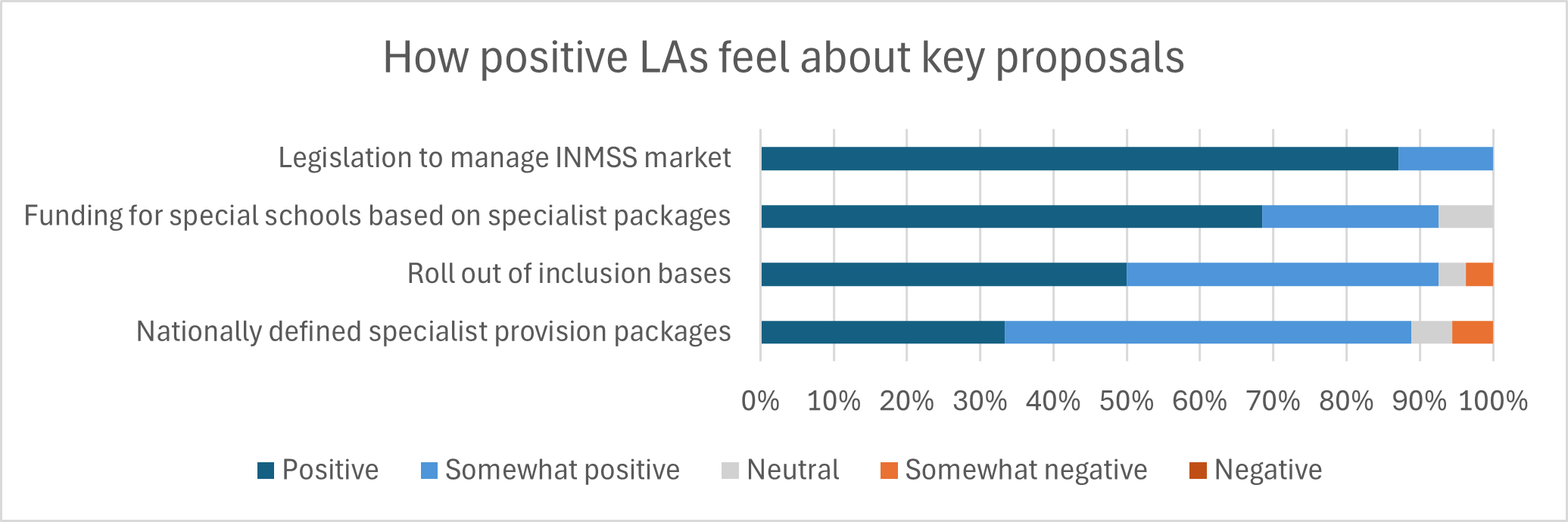
The most significant caution in this area voiced by local authorities was that legislation to more strongly regulate independent special schools must be developed with a view to ensuring overall placement sufficiency. This could require giving powers to local area partnerships to create new specialist provision efficiently and swiftly in order to meet emerging needs. Some of the current demand for specialist provision will be met with the roll-out of inclusion bases but this will take time. In the short term there is likely to be the need to create additional specialist capacity to meet need before the longer-term impacts of a more inclusive mainstream offer and a stronger targeted plus tier can take effect on stabilising demand.
The proposals to curb use of and/or cap fees at independent schools are well intentioned but it could lead to greater pressure for some local authorities who rely on this provision. Larger local authorities and those where there are more rural regions, where it is not feasible to open schools in all geographic areas, will be most affected. Proposals could also lead to many smaller providers ceasing, which would place even more pressure on local authorities where sufficiency is an issue.”
There is a concern that whilst the proposed capping of costs of independent provision is to be welcomed, this may lead to providers either leaving the market or seeking to amend the nature of need that they meet; thus leaving a gap in provision for the children with the most complex needs. This will need to be addressed in relation to the opportunity for local authorities or academy trusts to open more Special School provision to meet this potential gap.”
Inclusion Bases have a critical role to play in the reformed specialist sector. There is already evidence of how excellent provision in inclusion bases, commissioned to meet needs locally, can transform outcomes for children and young people. However, there is also huge variability in the quality of practice in the delivery of inclusion bases and a wide variety in how effectively they are commissioned to meet needs. As these new provisions are expanded it is essential that sufficient attention is given to ensuring the consistent high quality of provision, backed up by inspection and commissioning oversight.
The development of Inclusion Bases, while positive in principle, could place substantial additional demands on already stretched schools if national expectations outstrip local resource levels or if specialist services remain understaffed.”
Finally, a minority of local authorities that we engaged voiced a concern that the specialist provision packages, while delivering greater consistency, quality and fairness, would also need to be sufficiently flexible to allow for personalisation and to meet the very wide variety of needs with children and young people present. This will be a critical balance to be struck by the expert design panel in the next phase of their work.
We are concerned that this “one size fits all” approach to packages and plans may not reflect the reality of the diverse needs of children with SEND. We see a huge variety of needs – many children’s support doesn’t neatly fit into a predefined package. There is a risk of increased conflict if parents perceive the new packages as too rigid or as a gatekeeping tool. We agree with the aim to simplify and make support more consistent, but flexibility is crucial – the system must still allow personalisation, or it will not meet children’s individual needs.”
Resolving disputes
The current SEND system is characterised by a high and rising number of appeals to the SEND Tribunal. In the last year alone the number of appeals to SEND tribunals grew by 55 per cent, demonstrating an increasingly contentious system, where satisfaction is falling and trust is being eroded. However, as we have argued in our previous research, the far-reaching impact of Tribunal decisions, particularly on where children and young people are placed, has contributed to the growing use of high-cost placements in independent provision which is not sustainable. The Tribunal system is a lengthy, costly means of dispute resolution for parents, local authorities and their partners.
It is therefore encouraging that the SEND consultation places a much greater emphasis on resolving disputes through independent, locally commissioned mediation services and through an improved and clearer approach to school complaints. The proposed reforms also include some significant changes to the role of the SEND Tribunal. In future parents will be able to appeal to the SEND Tribunal:
- against local decisions not to carry out an assessment for specialist provision
- against a local decision that a child does not meet the new nationally defined threshold for specialist provision
- against a local decision about a specialist setting.
In the latter case, Tribunals will be able to quash a local authority decision and order them to reconsider. But the Tribunal will not have the power to name a setting for the child.
These reforms to the role and scope of the Tribunal represent a good balance between maintaining important protections for parental rights while limiting some of the most distorting effects of the current system. Overall, 80 per cent of local authorities felt positive or somewhat positive with the proposals around a reformed role for the SEND Tribunal. And while some local authorities felt that changes to the Tribunal system did not go far enough, more reflected on the improvements that reforms to dispute resolution could bring.
Continued reliance on adversarial routes to resolve disagreement. If dispute resolution and tribunal arrangements are not fundamentally rebalanced, reform risks perpetuating escalation, drawing resources away from early help and system improvement.”
The changes to tribunal powers are much needed – especially limiting the power to place in the INM sector or to force a maintained special school to go over numbers.”
The SEND reform proposals on dispute resolution contain a recommendation that there is greater transparency around Tribunal decisions and the actions that are taken as a result. In this spirit of transparency, the Government may also wish to consider publishing data both on the specific elements of an inclusion appeal that are upheld and on the characteristics of families that have their concerns resolved at Tribunal. The claim is often made, based on anecdotal evidence, that Tribunal processes are not sufficiently accessible to families from more disadvantaged backgrounds because the costs, either in terms of money or time, of bringing an appeal to Tribunal can be high. However, it is impossible to either prove or disprove this claim because no data is captured or published. In the interests of ensuring that the disputes process works for all families, irrespective of income or ethnicity, there could be a strong argument for including such a data collection and publication in the future.
Important issues not addressed by the proposed reforms
As well as asking local authorities to reflect critically on the strengths of the reforms and the elements which posed greatest concern, we also asked them to flag where they felt there were significant omissions. Four main areas were raised consistently in their responses.
Post 16
There is an absence of clarity around post‑16 and post‑18 support. While the reforms focus heavily on early years and school‑age provision, there is a lack of detail regarding how further education settings will be supported, how post‑16 pathways will be funded, and how young people transitioning into adulthood — particularly those with ongoing, complex needs — will be ensured continuity of provision.”
One of the main omissions in the current reform proposals is a compelling vision for how children and young people with SEND are to be supported to prepare for adulthood, including opportunities for developing their independence and gaining understanding and experience of employment. This is perhaps increasingly critical given the rising percentage of young people nationally who are unable to work due to their health needs. The different ages of transition to adulthood in education, health and care are still unresolved and the sense of an impending cliff-edge in support remains very real for young people and their families. Considering how to bring a range of partners including young people, parents, employers, further and higher education, adult social care, housing and health together to co-develop ambitious pathways to adulthood for young people with SEND could be a constructive next step.
Workforce
If I had to name the single most important gap in the reform proposals, it would be this: the absence of a credible, fully-costed plan for the people who are actually going to deliver the vision. The white paper is ambitious and, in places, genuinely exciting. But ambition without workforce is just aspiration, and there are several workforce issues that the reforms either skirt around or don't address at all.”
The SEND consultation and reform proposals are very clear about the need to increase the skills of the workforce and have earmarked £200 million for training, as well as creating new opportunities for sharing specialist skills and expertise across the system. There is also direct acknowledgement of the shortage of educational psychologists and a commitment to train more. However, there is a need for a strategic overarching workforce plan that sets out estimates of how many skilled practitioners, in which professions, and on what timescale will be needed, nationally, to deliver the vision set out in the SEND reforms and then plan back from that point to set up the recruitment and training routes that will provide a workforce at sufficient scale. In parallel, the ambitions set out in the SEND consultation may require changes to the mix of roles and skills required in schools. This is a national dialogue that should be opened up with schools and Trusts to start laying the foundations for future change.
Needs that fall outside the definition of “SEND”
A key issue missing from the proposals is the needs of children who sit at the intersection of SEND and wider vulnerability — those with medical needs, pupils who have experienced significant Adverse Childhood Experiences (ACEs), and families who are struggling to manage day to day. These children are often the most vulnerable in the system, yet their needs don’t always fit neatly into SEND pathways, and the reforms don’t currently set out a clear approach to supporting them.”
In establishing the parameters around a new inclusive vision for education and updating the code of practice it will be essential to consider the support and pathways available for those children and young people whose needs may not be SEND, but nonetheless will require additional support in order to thrive in learning. Many of these young people may end up requiring Alternative Provision or end up in Education Other than at School (EOTAS), which local authorities report as a growing pressure. While the SEND consultation puts forward an overall direction of travel for Alternative Provision, it does not recognise the perverse incentives in the statutory system surrounding Alternative Provision in the same depth as it does for SEND.
Young people presenting with Emotionally Based School Avoidance (EBSA) are a rapidly increasing cohort, but with the proposed redefinition of the SEMH element of the code or practice it is not clear how a coordinated partnership response will be made for these young people. There are, moreover, unresolved tensions around who is responsible for providing support for those children and young people who do not have SEND, but do have significant medical needs that can disrupt their entitlement to learning. There is a risk that if this wider landscape of need is not supported with the same focus on multi-agency early intervention, then it will simply place additional pressures on local authority statutory section 19 duties.
Home to school transport
The reforms do not cover transport to school, which is repeatedly raised as a practical but essential issue for families of children with SEND. Transport plays a critical role in placement suitability, attendance, and family stress, yet the proposals offer no detail on how this will be organised, funded, or managed under the new system.”
Home to school transport remains one of the most significant cost pressures on local government – in 2024-25 local authorities spent just under £2 billion on home to school transport for children and young people with SEND. At the same time, it is cited by parents as a lifeline to ensure that children and young people with SEND do not miss out on their entitlement to education. The clearly stated ambition of these reforms is that children with SEND will be educated closer to home, in their communities, with their peers and in their local schools. If this ambition is realised, then it should go some way towards alleviating the rapidly increasing demand for transport. However, this transition will take time and the pressures are immediate. More radical consideration may need to be given to reforming statutory responsibilities for home to school transport in a way that strikes the appropriate balance of responsibility and cost between the state and the parent in supporting children and young people to get to school, to ensure that the limited resources of the state are targeted on those families who need them most. Further exploration of options for reform can be found in our research on home to school transport undertaken for the LGA, which can be read on the LGA website.
The challenge of implementation
Finally, we asked local authorities to reflect on how confident they were in their capacity, and that of their partners, to deliver the reforms and to consider some of the challenges inherent in implementation.
Overall, the very large majority of local authorities (87 per cent) were confident that they would have the capacity to deliver the reforms but less than half were similarly confident that their partners locally would have the capacity to deliver. This chiefly reflected concerns about the capacity of health partners, and to a lesser extent mainstream schools, to deliver on the expectations of the new vision.
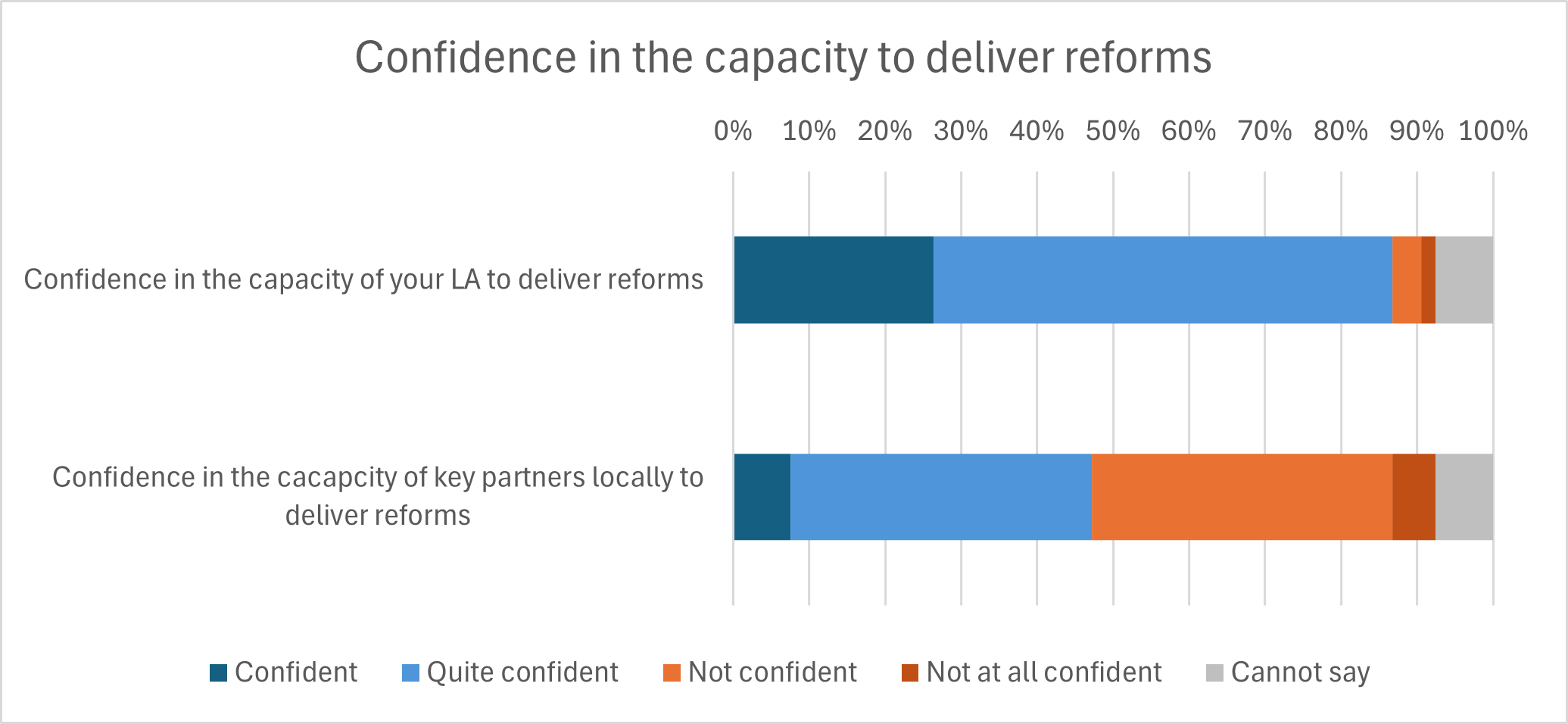
However, despite local authorities’ overall levels of confidence that they would deliver the reforms, they nonetheless raised some serious risks to the implementation process that should be taken on board by government as it plans the key phases of transition.
It is worth noting that, before we explore the more substantive risks to implementation, at the time of holding the workshops there was a high degree of anxiety among local authorities about the requirement to produce a local SEND reform plan on a very ambitious timescale, and without all the desired guidance being in place. While creating very significant short-term pressure for local government and partners in the SEND system, it does not present the same scale of risk to long-term implementation and we have therefore not explored this issue in detail here.
Building the foundations for the new system while continuing to manage the challenges of the current system
The biggest underlying risk to implementation is how to start creating the capacity for better support and earlier intervention whilst the whole SEND system is stretched, in some areas almost to breaking point, in managing the current level and complexity of demand. The perverse incentives that militate against better inclusion and the limits to effective decision-making that characterise the existing statutory framework remain in place until legislation changes. This tension of creating a bold new offer while simultaneously trying to maintain the current dysfunctional system is captured clearly in many of the local authority survey responses and was echoed in the workshops.
The most significant risk, in my view, is one that is deceptively simple to state but extraordinarily difficult to manage: the timing. The reforms ask us to build a new system while simultaneously winding down the old one — and the new system needs to be fully operational and trusted before families will accept any reduction in the protections they currently rely on. If the infrastructure isn't in place first, we won't just have failed to improve things. We will have actively made them worse for children who are in the system right now, during the transition. That is the scenario that keeps me up at night, and I don't think the white paper is sufficiently honest about how real that risk is.”
The most significant risk to effective implementation of the SEND reforms is the misalignment between ambition, capacity and accountability during a prolonged transition period, particularly while demand for statutory support continues to rise. The reforms rely on a shift towards earlier intervention, stronger mainstream inclusion and reduced reliance on EHCPs over time. However, in the short to medium term, EHCP demand is expected to continue growing, absorbing financial and workforce capacity that is critical to delivering reform activity itself. This creates a structural tension where local authorities must prioritise statutory compliance, limiting the headroom needed to invest in prevention, workforce development and system redesign.”
A timeline that feels both to rapid and too slow
The challenge of building one system while running another, leads to the strange perception that the timelines for implementation are both simultaneously too ambitious and too slow. This apparent contradiction is captured in local authority responses to our survey question on timescales for implementation.
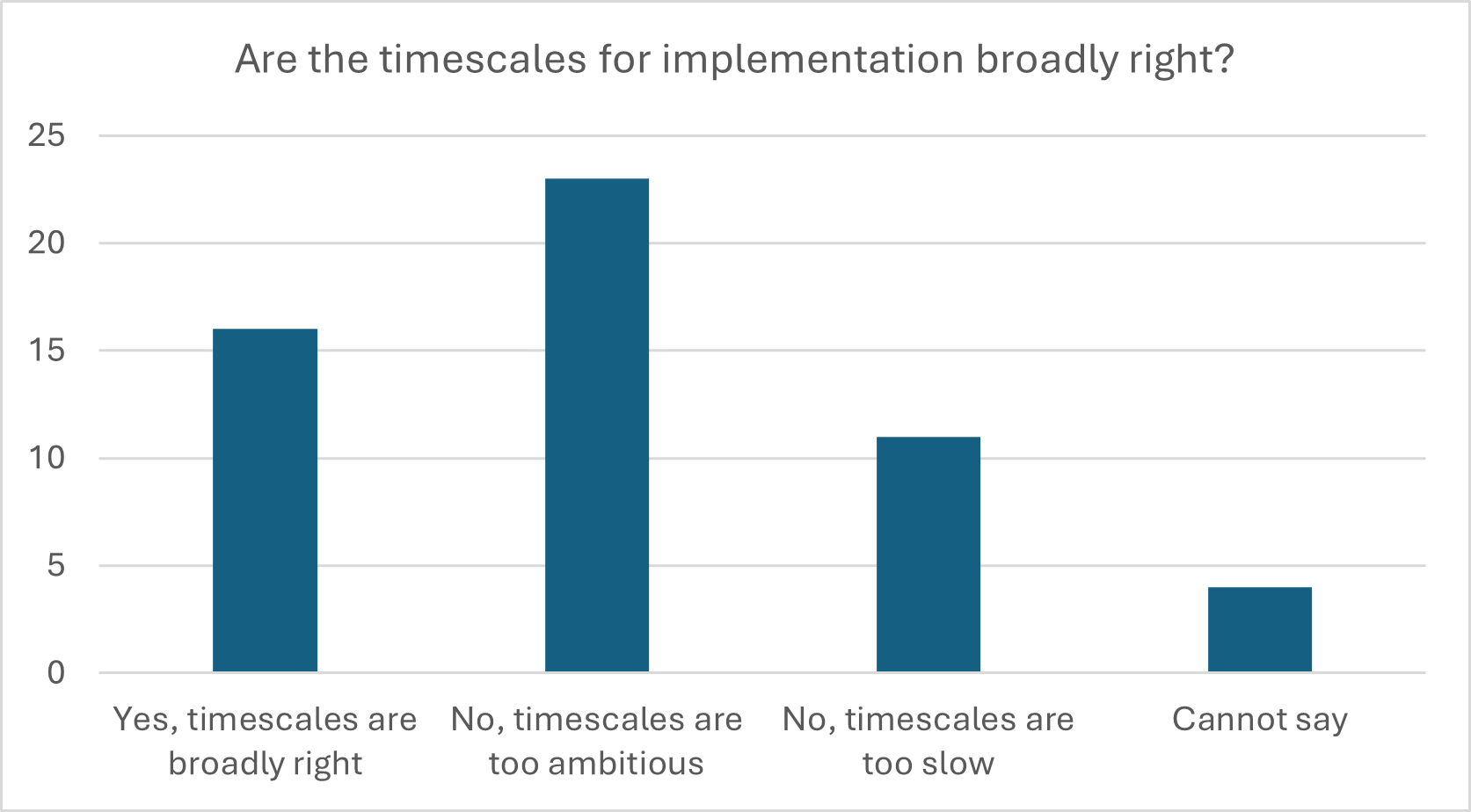
As shown in the chart above, 43 per cent of local authorities (23 out of 54 respondents) thought that timescales were too ambitious. This reflects the sheer volume of change that is anticipated in a short period of time, with major new initiatives such as the Experts at Hand offer and the mainstream and early years inclusion funds coming on stream this year and significant planning demands to get the transition process started. However, 11 out of the 54 respondents (20 per cent) felt that timescales were too slow. Specifically, the unavoidable long lead-in time for legislative change means that progress to those aspects of the reforms on which system transformation ultimately depends feel frustratingly sluggish.
Those long lead-in times to legislation pose their own political risk. There will be many local government elections and changes to leadership spanning the implementation process and it is not clear whether legislation can be passed before the next General Election. There is therefore a need to build cross-party consensus around the foundations and direction of reform both locally and nationally.
| Timescales are too ambitious | Timescales are too slow |
|---|---|
|
“The proposed timescales for implementation significantly underestimate the practical realities of delivering reform at scale within local systems. Firstly, the timescales do not adequately reflect the time required to recruit, train and embed the workforce needed to deliver the reforms…Expecting system change to be realised at pace without first stabilising and growing the workforce risks uneven implementation and reduced quality, particularly in the areas under greatest pressure. Secondly, the delivery timetable does not align with the reality of capital development and capacity creation.” “While the ambition to implement change quickly is commendable, the proposed timescales feel significantly rushed, creating a high-pressure environment to plan a viable delivery and funding model for upskilling mainstream schools. A primary concern lies in the logistical strain of managing a "dual system" during the transition; without explicit guidance or additional resources, local authorities will struggle to sustain both existing statutory requirements and new reform models simultaneously.” |
“While it is understood that reforms of this scale should not be rushed, the proposed timescales are simply too slow given the level of need already present in schools, families and wider services. The system is under significant pressure now, and the reforms as currently sequenced will not deliver improvements quickly enough to make a meaningful difference in the short to medium term.” “The reform proposals extend over many years (key changes not fully in place until 2029 for EHCP eligibility, and 2035 for the system to reach a “steady state”). Our view is that while careful phasing is sensible for managing change, these timelines are overly lengthy and risk delaying much-needed action for current children. For example, waiting until 2029 to reassess who has an EHCP means for the next 5+ years we must operate largely under the old system’s rules – but that system is failing and financially breaking right now.” |
Surging demand
The long gap between the publication of the reforms and the enactment of new legislation leaves the SEND system peculiarly vulnerable in the interim period. A defining feature of the current statutory framework is that there are very few levers that local, or central, government can use to effectively manage demand for SEND services. A significant minority of the local authorities that attended our workshops reported a very significant surge in demand for EHC needs assessments in the last couple of months since the white paper was published. In some cases, requests for assessments have been a third higher than what they had been in previous months.
This unprecedented surge was attributed to parents seeking to secure the protections afforded by an EHCP before those protections are replaced. It is yet to be seen whether this trend that has been observed becomes more widespread and whether it has peaked or continues to snowball. However, there is a very real risk that by the time the legislation comes into force the number of children and young people with EHCPs may have vastly outstripped the government’s current growth projections for the next three years. This could have a very detrimental effect on the financial security of local government, schools and health partners.
This delay is already contributing to a surge in demand as families try to secure support before rules change.”
Capacity
It is not just the challenge of continuing to manage the existing statutory demands of the SEND system that is likely to test the capacity of local authorities to deliver during this period, but the sheer weight of concurrent reform impacting on education and children’s services simultaneously. Families First, Best Start in Life, ICB reforms, a new inspection framework and curriculum changes form the backdrop against which the SEND reforms are introduced. In terms of policy drive and intention – the emphasis on early intervention and removing barriers to effective support – there is a high degree of synchronicity in these different reform agendas. But that does not diminish the volume of work required by a workforce that already reports feeling significantly under pressure. It also places pressure on the wider partners – schools, parents, young people, health and others – who are being asked to contribute to and shape reform.
For a minority of local authorities, the seismic upheaval of Local Government Reform will only serve to compound these difficulties. This is not only about the capacity of local authorities to manage concurrent very significant change programmes, but the tension between the requirement on local authorities to produce SEND three-year reform plans and the LGR legislation prohibiting them from making plans for councils that do not yet exist.
Local authorities are already operating under sustained pressure, managing rising EHCP demand, safeguarding responsibilities, workforce shortages and financial constraint, while simultaneously preparing for major reform across education, Families First and Best Start. Implementing SEND reforms alongside these pressures inevitably requires difficult prioritisation decisions and short‑term mitigations, rather than the fully co‑produced, system‑designed approach that would deliver the greatest long‑term value.”
As our local authority is going through Local Government Reform we are likely to have a significantly reduced capacity to implement the changes at pace.”
Funding
While the injection of additional funding to support the reforms is significant – £1.8 billion for Experts at Hand, £1.6 billion for the inclusion fund, over £3 billion in capital for new places inclusion bases, £200 million for national training and a further £200 million to build capacity in local authority SEND teams – there remains a concern that the financial pressures of the existing system will prove to be overwhelming and that the considerable upfront investment, once distributed out between individual local authorities, schools and settings will not be enough to leverage the quantum shift that the reforms are promising and parents and young people are expecting.
There is a risk that unrealistic timescales and funding assumptions undermine delivery. While national investment is welcome, funding for inclusion, workforce training and Family Help is spread thinly across all local authorities and does not fully reflect transition costs or the need for dual running of systems. This increases the likelihood that short‑term pressures detract from the reform programme, delaying its intended impact.”
The system cannot afford another misfire. The credibility of these reforms — and frankly the credibility of the system as a whole — depends on the government getting the sequencing right, funding the transition properly, and being honest with families and with us about what is achievable and when.”
In response to our survey, less than a quarter of local authorities were confident that they would be able to fulfil their statutory duties and support transition within the funding envelope available over the next three years. This points to some very acute short to medium term pressure on finances. However, it is encouraging that the percentage who felt confident that they would be able to deliver their statutory duties post legislation within the funding envelope provided rose to 44 per cent with a much lower proportion (29 per cent) stating that they were not confident. This suggests that particular care will need to be taken over the next three years to monitor the continued financial viability of implementation.
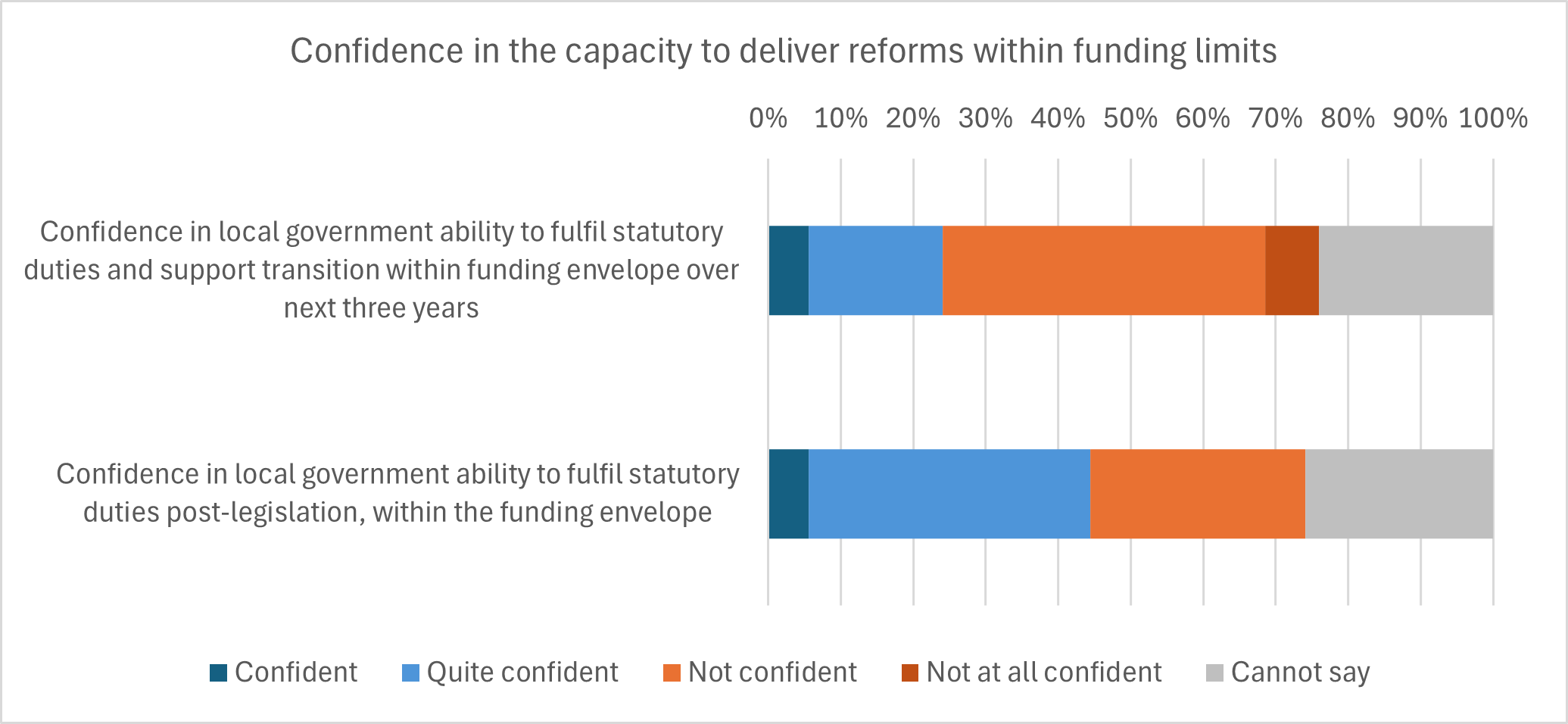
Building the confidence and trust of parents and carers and maintaining that through the uncertainties of transition
Finally, and perhaps most importantly, successful implementation of the reforms will require the trust, engagement and ongoing confidence of parents and carers to be successful. For many parents, trust in the SEND system is at an all-time low and finding a way to build a shared consensus around the pathway to reform will be challenging, but essential. What central and local government, with schools and health partners, are able to do together over the next three years, before legislation comes into force, to begin to change for the better the daily experience on the ground for children and young people with SEND, and by extension for their families, will be a litmus test of the success of these reforms. There is too much at stake to over promise and under deliver.
I come back to parental trust, because without it none of this works. Families have been promised change before. They have filled in the forms, attended the reviews, navigated the tribunals, and in too many cases come out the other side with nothing to show for it. The risk is not that parents don't want this reform to succeed — most do. The risk is that their reasonable, hard-won scepticism causes them to disengage, to seek legal protection rather than partnership, and to assume the worst at every decision point. Rebuilding that trust is not a communications task. It is an implementation task. Every time a child gets timely support, every time a family feels genuinely listened to, every time a school demonstrates that inclusion is real and not just rhetorical — that is where trust gets rebuilt.”